
 EN
EN
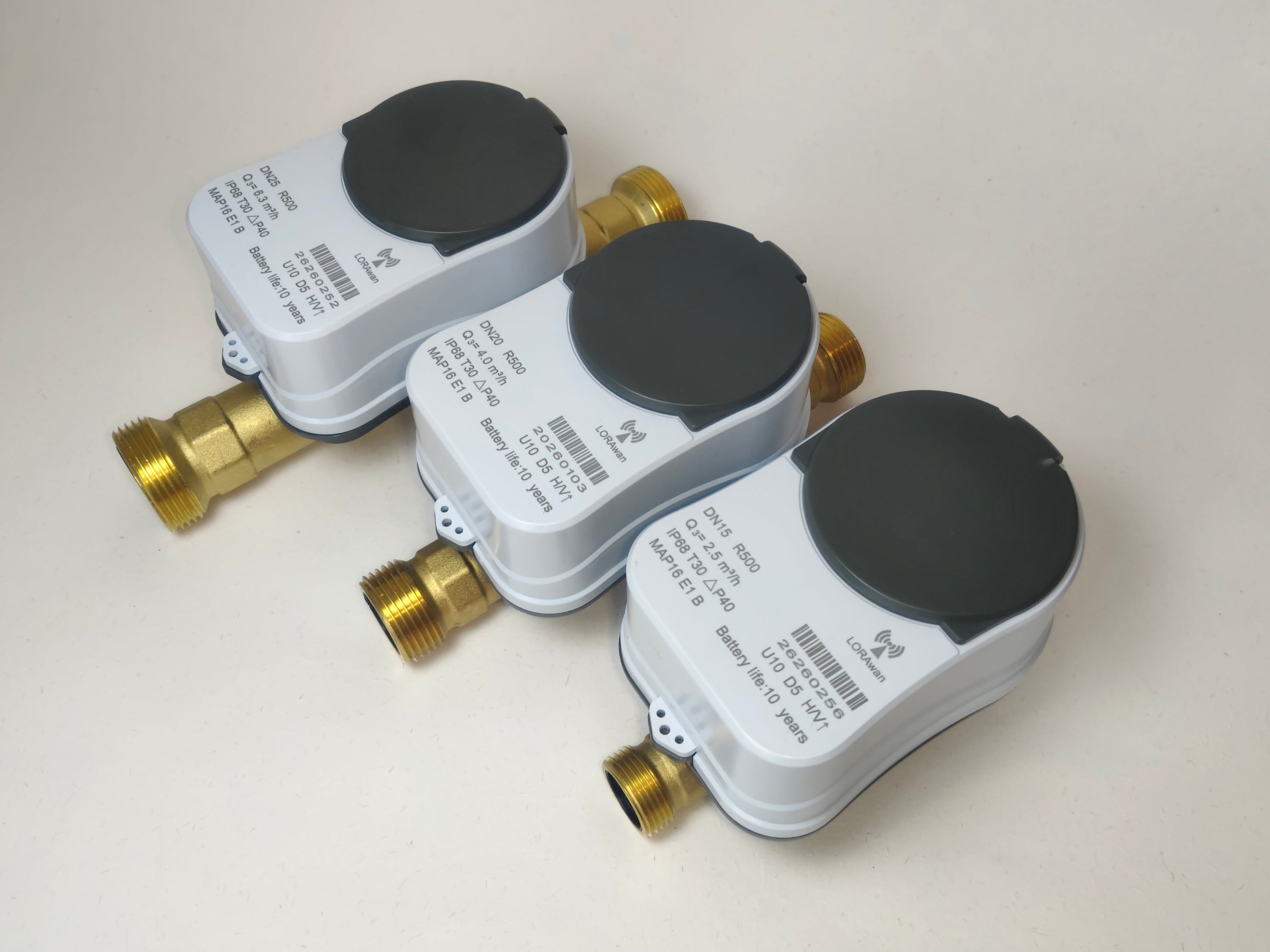
Addressing Non-Revenue Water with Precision Smart Water Meter Design
The NRW crisis: How aging infrastructure and undetected leaks cost utilities up to 30% of revenue
Non-revenue water (NRW) — water produced but not billed — remains a persistent drain on utility finances. Aging pipe networks, inaccurate mechanical meters, and undetected leaks allow lost water to go unaccounted for. According to the International Water Association (IWA), NRW often exceeds 25% of total system input, and in some utilities it can reach 30% of revenue. Beyond immediate financial loss, high NRW undermines water conservation goals and strains infrastructure. Traditional walk-by meter reading misses slow leaks, while physical theft and meter tampering further inflate losses. The problem intensifies as water scarcity and regulatory pressures mount. Without real-time data, utilities struggle to pinpoint losses, allowing minor underground leaks to run for months and waste millions of gallons. Smart meters transmit flow data continuously, enabling utilities to detect anomalies within minutes—not weeks. This shift from reactive to proactive management is essential for sustainable water supply. Precision smart water meter design directly tackles these challenges by delivering high-resolution data and automatic alerts, turning a once-opaque loss tally into a manageable operational metric.
Core design imperatives: Accuracy (±0.5%), ultra-low-power operation, and hardware-level tamper resistance
To confront NRW, a smart water meter must deliver accuracy, longevity, and security. Ultrasonic flow measurement technology achieves ±0.5% accuracy across the meter's full flow range, even at low flows where mechanical meters often stall. This precision ensures that every gallon is accounted for—from high-volume commercial use to the smallest trickle. Ultra-low-power design is equally critical: meters must operate for a decade or more on a single battery, minimizing field visits and replacement costs. Advanced sleep modes and efficient electronics push battery life beyond 12 years in many designs. Hardware-level tamper resistance protects against revenue loss from interference. Sealed enclosures, magnetic field detectors, and reverse-flow alarms thwart physical and magnetic tampering attempts. Embedded analytics instantly flag abnormal usage patterns, enabling rapid response. These design imperatives converge to create a reliable, low-maintenance metering node that underpins true NRW reduction—embedding accuracy, endurance, and security directly into the hardware to establish a trustworthy data foundation for billing, conservation, and network management.
Real-Time Leak Detection and Flow Intelligence Enabled by Smart Water Meter Functionality
How adaptive sampling and flow profiling trigger automated leak alerts within 15 minutes
Modern smart water meters employ adaptive sampling algorithms that dynamically adjust measurement frequency based on flow rate changes. When a fixture starts, the meter increases sampling to 1-second intervals; during steady flow, it drops to 15-minute intervals to conserve power. A dedicated flow profiling engine continuously compares real-time usage against a learned baseline—a digital “fingerprint” of normal consumption. Any deviation exceeding 2 liters per hour triggers an alert classification. If the anomaly matches a continuous trickle pattern (typical of pinhole leaks), the system pushes an automated leak alert to the utility’s dashboard within 15 minutes. This near-real-time response reduces non-revenue water losses by up to 20% and enables field crews to pinpoint leaks before infrastructure damage escalates.
Ultrasonic vs. mechanical measurement: Why ±0.5% accuracy at low flow drives conservation ROI
Ultrasonic transit-time sensors achieve ±0.5% accuracy down to 0.5 liters per hour—a critical threshold where mechanical meters often fail to register flow at all. Mechanical designs rely on rotating impellers that suffer from bearing wear and magnetic hysteresis, causing under-registration of up to 8% after five years. In contrast, solid-state ultrasonic meters have no moving parts, maintaining calibration over a 12-year lifespan. This precision captures revenue from previously unmetered micro-flows, such as toilet leaks or irrigation drips, which can account for 10% of residential consumption. For a utility serving 100,000 accounts, recovering that loss boosts annual revenue by $740 k, while the embedded flow intelligence enables targeted conservation campaigns that reduce per-capita demand by 5–7% within two years.
Operational and Financial Advantages of Smart Water Meters Over Traditional and AMR Systems
12+ year lifespan, 40% lower field-read labor, and remote firmware updates — quantifying TCO reduction
The shift to smart water meters delivers measurable financial and operational gains. A 2023 total cost of ownership (TCO) analysis by a leading metering industry consortium found that the solid-state design of ultrasonic smart meters extends device lifespan beyond 12 years, significantly reducing replacement expense compared to traditional mechanical units that often fail within 8–10 years. Automated remote reading eliminates manual field visits, slashing labor costs by an average of 40%. Moreover, remote firmware updates allow utilities to deploy new features, security patches, and billing logic without on-site truck rolls, further cutting operational overhead. When combining extended service life, drastically lower workforce demands, and over-the-air maintainability, the average 15-year TCO for a smart water meter deployment is estimated to be 25–30% lower than that of conventional AMR systems—making it a compelling investment for modern utilities.
Interoperability and Future-Proof Integration: Key Design Considerations for Smart Water Meter Deployment
Power architecture choices: Long-life batteries vs. energy harvesting for sustainable scalability
Long-life lithium batteries power a smart water meter for 12–15 years under typical duty cycles, slashing field-service labor by 40%. This predictable, self-contained design suits buried or remote installations where access is costly. Energy harvesting via micro-turbines or temperature gradients offers theoretically indefinite operation, but current harvesters deliver only 0.5–2 mW—enough for a handful of daily transmissions. That makes them viable only in high-flow, easily accessible sites. Battery-first architectures remain the pragmatic choice for mass-scale, low-maintenance rollouts.
Communication protocol alignment: NB-IoT for urban billing integrity vs. LoRaWAN for rural coverage efficiency
NB-IoT’s licensed-spectrum, synchronous uplink delivers 99.9% data-delivery rates in dense urban grids, cutting billing discrepancies by 23% compared to legacy AMR. Short latency and deep indoor penetration ensure every cubic meter is accounted for. LoRaWAN’s star-of-stars topology, by contrast, spans 10–15 km in open terrain, covering scattered rural districts with a single gateway. Its adaptive data rate and ultra-low power draw align with meters that send only a few packets per day. For utilities managing mixed landscapes, a dual-mode design that selects NB-IoT for billing clusters and LoRaWAN for remote leakage monitoring future-proofs the investment.
FAQs
What is non-revenue water (NRW)?
Non-revenue water refers to water that is produced but not billed due to factors like undetected leaks, theft, or inaccuracies in mechanical meters.
How do smart water meters reduce NRW?
Smart water meters transmit flow data in real-time, enabling utilities to detect anomalies and leaks promptly, minimize unaccounted losses, and improve system efficiency.
What is the lifespan of a smart water meter?
Ultrasonic smart water meters typically operate for 12–15 years on a long-life lithium battery, making them highly durable and cost-efficient.
How do ultrasonic meters achieve high accuracy?
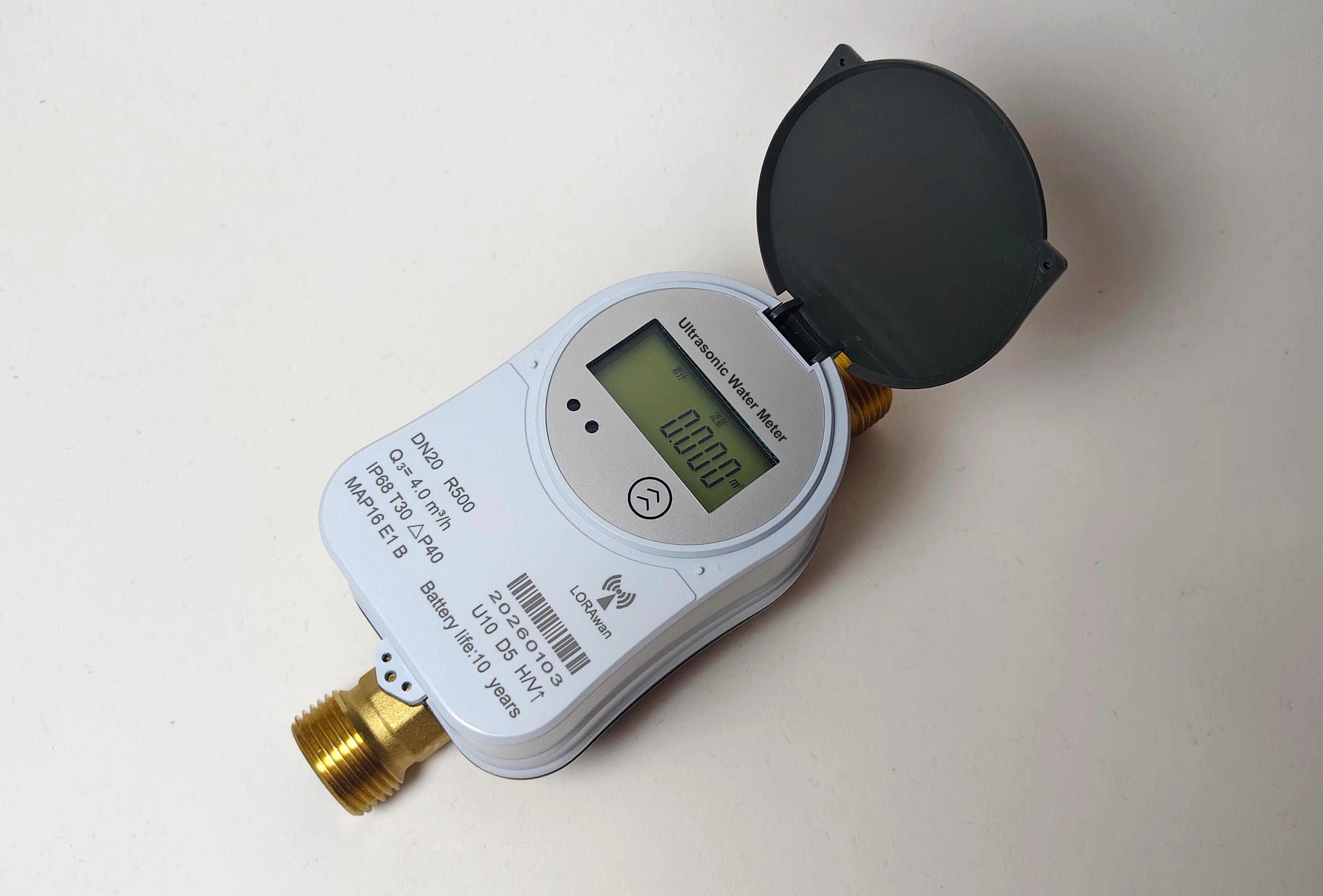
Ultrasonic meters use transit-time sensors to deliver ±0.5% accuracy, even at low flows where mechanical meters under-register usage or fail altogether.
Can smart meters work in both urban and rural areas?
Yes, smart meters can utilize NB-IoT for urban areas and LoRaWAN for rural coverage, ensuring efficient operation in a variety of environments.
Table of Contents
- Addressing Non-Revenue Water with Precision Smart Water Meter Design
- Real-Time Leak Detection and Flow Intelligence Enabled by Smart Water Meter Functionality
- Operational and Financial Advantages of Smart Water Meters Over Traditional and AMR Systems
- Interoperability and Future-Proof Integration: Key Design Considerations for Smart Water Meter Deployment
- FAQs