
 EN
EN
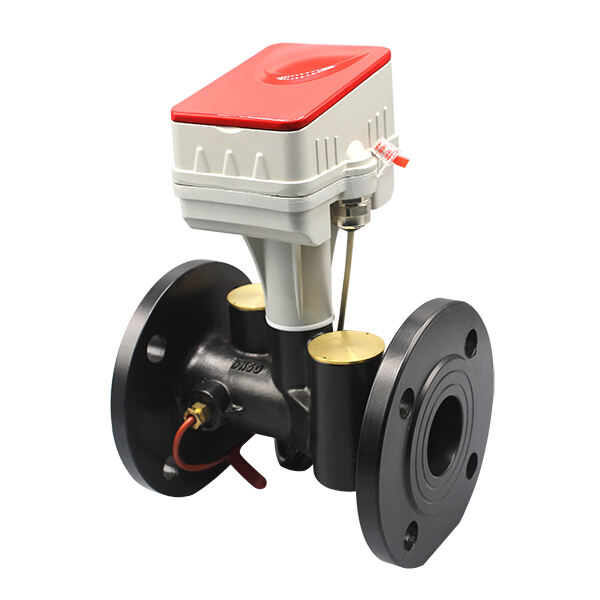
OMS-Compliant M-Bus Water Meters: The Foundation for Centralized Collection
Why OMS Certification Ensures Interoperability Across Centralized Systems
The Open Metering System (OMS) certification tackles those frustrating compatibility issues that come up when deploying M-Bus water meters on a large scale. When there are no standard protocols in place, utility companies end up stuck with data silos where meters made by different manufacturers just won't talk to the central system. What OMS does is basically check if equipment follows the EN 13757-7 standards, so all those different devices can understand each other's messages regardless of what kind of infrastructure they're working with. According to some recent metrology research from 2023, certified meters actually manage to send data accurately around 99.8% of the time even when mixed with products from other brands. This gets rid of those pesky proprietary roadblocks, letting utilities plug in new meters alongside old ones without needing expensive middleware solutions. Plus, the certification requires backward compatibility too, meaning older devices will still work alongside newer M-Bus meters as upgrades happen over time. And it doesn't stop there either - uniform encryption methods and proper error handling get enforced across the board to keep data intact as it travels to central servers.
Key Technical Requirements: Addressing, Telegram Structure, and Data Objects
Three technical pillars enable reliable centralized data collection in OMS-compliant M-Bus water meter systems:
-
Addressing Architecture: Each meter requires a unique 8-byte primary address (with an optional 4-byte secondary address), aligned with ISO/IEC 11770 standards. This hierarchical scheme supports up to 250 devices per line segment without collisions.
-
Telegram Structure: A fixed 9-byte header (containing control and address fields) precedes variable-length payloads protected by CRC16 checksums. EN 13757-3 defines 12 standardized telegram typesâincluding alarm broadcasts (SND-NR) and encrypted read requests (RSP-UD).
-
Data Objects: Value Information Fields (VIFs) encode measurements using predefined units:
VIF Code Measurement Unit Resolution 0.3.0 Current Volume Cubic meters 0.001 0.4.0 Historical Usage kWh 0.1 0.0.0 Alarm Flags Bitmask N/A
Manufacturer-specific extensions (e.g., VIF 0.7.0) require pre-approval under the OMS framework to maintain cross-system interpretability. Strict timing parametersâincluding a â¤2ms response windowâprevent telegram collisions in dense deployments.
Wired vs Wireless M-Bus Architectures for Scalable M-Bus Water Meter Networks
Wired M-Bus (EN 13757-2): Topology, Distance Limits, and Power Delivery for Dense Deployments
The wired M-Bus system operates on a two wire setup where devices connect in a chain fashion. These systems can handle segments stretching as far as 1000 meters, and each segment can support around 250 water meters connected through the M-Bus protocol. One major benefit comes from how it delivers power centrally across the network. The bus itself provides the necessary voltage to all endpoint devices, which means no need for regular battery changes. Maintenance expenses drop significantly in dense installations such as apartment buildings, often reducing them by about thirty percent. When installation lengths exceed the 1000 meter limit though, additional equipment called repeaters becomes necessary. This adds another layer of complexity to planning for larger scale deployments where space constraints might already be challenging enough.
Wireless M-Bus (EN 13757-4): Frequency Bands, Battery Life, and Coverage Optimization for Large-Scale M-Bus Water Metering
The Wireless M-Bus (wM-Bus) works within those license-free ISM bands we see in Europe at frequencies like 169 MHz, 433 MHz, and 868 MHz. When choosing which frequency to use, engineers have to find that sweet spot between how far the signal can reach, how well it penetrates obstacles, and how fast data moves. Take the lower end of the spectrum, say around 169 MHz, these can cover distances of up to 5 kilometers when there's nothing blocking the path, but they come at the cost of reduced bandwidth capacity. Battery life is another key consideration for many installations. That's why some systems use what's called Stationary mode (S), where devices only transmit their data 2 to 4 times each day. This conservative approach means batteries can last over a decade before needing replacement. Cities deploying these systems on a big scale often turn to mesh networking solutions along with smart gateway technology to fight against signal loss problems common in dense urban areas. By strategically placing repeaters throughout the network, operators can cut down on dead zones by about 70 percent. And through intelligent power management adjustments, connections stay strong even across mixed network environments with different types of infrastructure.
Data Concentrators and Gateways: Enabling Unified Backend Integration for M-Bus Water Meters
Truesync Collect and Equivalent Master Units: Protocol Translation, Polling Scheduling, and Firmware Management
Truesync Collect master units form the central connection point for M-Bus water meter networks that need to work together. These devices act as translators between the special M-Bus signals and common industrial formats like Modbus TCP, MQTT, and REST APIs. This translation makes it possible to connect everything from SCADA systems to billing software without compatibility issues. The smart scheduling feature helps manage when these devices communicate. It extends battery life for wireless meters while still getting those important hourly or daily usage readings. Another big plus is the ability to update firmware remotely across thousands of devices at once. According to recent studies published in WaterTech Journal last year, this remote updating capability cuts down on maintenance expenses by around 40 percent compared to sending technicians out manually. And there's plenty more functionality packed into these systems too.
- Protocol Bridging: Converts M-Bus data objects into Modbus registers for legacy industrial systems
- Adaptive Polling: Prioritizes high-usage endpoints during peak demand windows
- OTA Management: Delivers encrypted firmware patches to address security vulnerabilities
This centralized control layer eliminates data silos, enabling unified analytics across heterogeneous meter fleets.
Hybrid Deployment Strategies: Integrating Legacy and Modern M-Bus Water Meters in Municipal Utilities
Municipal utilities often manage mixed M-Bus water meter fleetsâspanning decades-old wired devices and newer wireless endpoints. Effective modernization preserves legacy investments while unlocking advanced data capabilities.
Dual-Mode Gateways Bridging Wired and Wireless M-Bus Water Meter Endpoints
Dual mode gateways bridge the gap between different communication standards by handling both wired connections following EN 13757-2 specifications and wireless setups under EN 13757-4 rules at the same time. These devices work behind the scenes to convert data packets from old fashioned two wire systems into something compatible with today's wireless mesh networks, which means no more tedious manual matching of data formats. Take water companies for instance. They install these hybrid gateways so they can keep using their older wired meters that are still working fine, but also add new battery operated wireless sensors in those tricky spots where running cables just isn't practical. This approach gives them better network coverage across their entire system without having to rip out all the existing infrastructure and start from scratch.
Cloud-Native Ingestion Pipelines: From Raw M-Bus Telegrams to Actionable Utility Analytics
Cloud native ingestion pipelines take those raw M Bus telegram signals and turn them into clean, ready for analysis data sets. They do this automatically checking validity, normalizing units, aligning timestamps, and using machine learning to spot weird stuff happening in the data stream. Cities and towns collect these readings through MQTT or other common protocols, running pattern checks as they come in to catch things like pipe leaks or strange usage spikes. Moving away from old school manual data handling toward smart automation has made it possible to predict where problems might happen next. Recent studies on how well these systems work show that some places have cut down on lost water that never gets billed by around 22% after implementing these smarter approaches.
| Pipeline Stage | Function | Outcome |
|---|---|---|
| Data Ingestion | Collects & decrypts M-Bus telegrams | Unified raw data repository |
| Normalization | Standardizes units & timestamps | Consistent analytics inputs |
| Anomaly Detection | ML-driven pattern analysis | Leak alerts within 15 minutes |
FAQs About OMS-Compliant M-Bus Water Meters
What is the Open Metering System (OMS) certification?
The OMS certification ensures interoperability among different manufacturers' water meters by checking compliance with the EN 13757-7 standards, allowing seamless data communication across diverse devices.
How do wired and wireless M-Bus systems differ?
Wired M-Bus systems deliver power over a two-wire setup, supporting dense deployments without the need for battery changes, while wireless M-Bus systems operate within license-free ISM bands and rely on battery power for remote installations.
What are data concentrators and gateways?
Data concentrators and gateways are devices that translate M-Bus signals into common industrial formats, enabling centralized data management and integration with various backend systems without compatibility issues.
How do cloud-native ingestion pipelines benefit utilities?
Cloud-native pipelines transform raw M-Bus telegrams into actionable data through validation, normalization, and anomaly detection, enhancing utility analytics and operational efficiency.
Table of Contents
- OMS-Compliant M-Bus Water Meters: The Foundation for Centralized Collection
- Wired vs Wireless M-Bus Architectures for Scalable M-Bus Water Meter Networks
- Data Concentrators and Gateways: Enabling Unified Backend Integration for M-Bus Water Meters
- Hybrid Deployment Strategies: Integrating Legacy and Modern M-Bus Water Meters in Municipal Utilities
- FAQs About OMS-Compliant M-Bus Water Meters