
 EN
EN
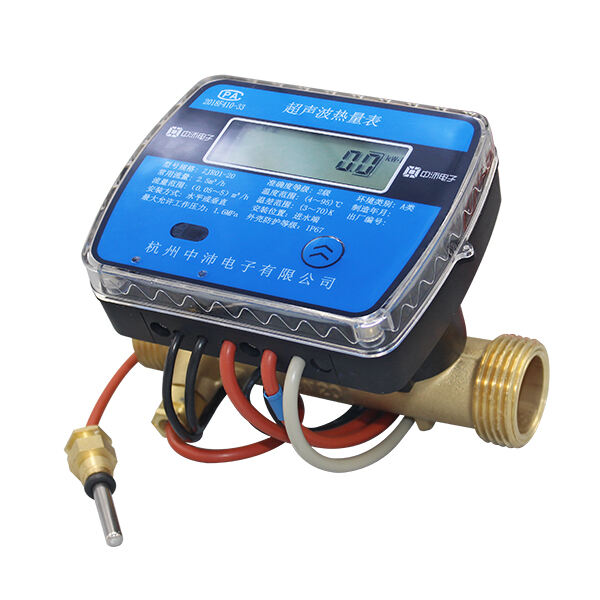
Core Functionality: How a Water Meter with Valve Combines Measurement and Control
Electromechanical Integration: Synchronizing Flow Sensing and Valve Actuation
A water meter with valve unifies flow measurement and shutoff control in a single, compact unit. Turbine or ultrasonic sensors capture real-time flow data, feeding it to an integrated processing unit. When anomalies—such as sustained flow 20% above baseline for 15 minutes—are detected, the system triggers the valve actuator. Motorized gear assemblies respond in under one second, halting water flow decisively. This tight coupling transforms traditional metering from passive observation into active infrastructure protection—preventing pipe bursts, minimizing water waste, and reducing emergency response time.
Design Variants: Manual, Motorized, and Pulse-Actuated Valves in Modern Water Meters with Valve
Valve configurations are engineered for specific operational priorities:
- Manual valves: Operated via external handles; used exclusively for planned maintenance isolation where remote control isn’t required.
- Motorized valves: Powered by batteries or mains electricity, these integrate seamlessly with AMR and IoT platforms, enabling remote emergency shutoffs and scheduled interventions.
- Pulse-actuated valves: Leveraging hydraulic pressure from flow surges, they operate without external power—ideal as low-cost, fail-safe backups for leak detection in off-grid or battery-constrained deployments.
Motorized variants lead modern installations due to their compatibility with smart utility ecosystems; pulse systems serve as resilient complements rather than primary controls. All variants are strategically positioned upstream or downstream to ensure laminar flow conditions and optimal valve responsiveness.
Precision Engineering: Calibration, Accuracy, and Low-Flow Performance
ISO 4064-1 Compliance: Ensuring ±2% Accuracy Down to 15 L/h for Leak Detection
Compliance with ISO 4064-1 is non-negotiable for high-integrity water metering. The standard mandates ±2% measurement accuracy at flow rates as low as 15 liters per hour—enough to detect a dripping faucet or micro-leak before it escalates. For meters with integrated valves, this precision is foundational: inaccurate low-flow readings risk both false positives (unnecessary shutoffs) and dangerous oversights (missed leaks). Certification requires traceable lab testing across temperature, pressure, and flow profiles, ensuring field performance aligns with laboratory rigor. Utilities leveraging ISO-compliant valve meters report up to 40% faster leak resolution and measurable reductions in non-revenue water.
Adaptive Calibration: Real-Time Signal Feedback from Turbine or Ultrasonic Sensors
Adaptive calibration sustains ISO-grade accuracy over time by continuously analyzing sensor signals—correcting for thermal drift, mechanical wear, and pressure-induced turbulence. Algorithms process raw turbine pulse counts or ultrasonic transit-time differentials in real time, dynamically adjusting gain and offset parameters. Unlike static factory calibration, this approach maintains ±2% tolerance across the meter’s service life, extending recalibration intervals and cutting long-term O&M costs. Crucially, it ensures the valve actuates only when anomalies are statistically validated, not just transient spikes—enhancing reliability in both leak response and prepaid enforcement scenarios.
Smart Integration: Remote Monitoring, AMR, and Prepaid Control via Water Meter with Valve
Communication Architectures: Balancing NB-IoT Reliability and RF Latency for Sub-Second Cut-Off
Reliable smart operation hinges on purpose-built communication layers. NB-IoT delivers secure, wide-area connectivity for routine daily usage uploads and firmware updates—ideal for its energy efficiency and deep-building penetration. For life- and asset-critical events like burst detection or balance-triggered shutoff, dedicated RF channels handle commands with sub-500ms latency. Redundancy protocols automatically failover between NB-IoT and LoRaWAN® during cellular outages, sustaining 99.8% network availability in field-deployed smart city infrastructure (Smart City Infrastructure Report, 2024). This dual-path design ensures that measurement integrity never compromises control responsiveness.
Use Case: Prepaid Water Management with Auto-Shutoff and Consumption-Based Billing
Prepaid models powered by valve-integrated meters shift utility management from reactive billing to proactive resource governance. When user credit falls below a configurable threshold, the motorized valve enforces immediate flow restriction—eliminating post-service disconnection delays and reducing non-revenue water by 15–30% (Urban Water Journal, 2023). SMS alerts at 20% and 10% remaining balance, coupled with mobile payment integration, drive timely top-ups. Critically, AMR-enabled usage dashboards give households real-time visibility—correlating directly with a 22% average reduction in consumption (ibid.). This convergence of precision measurement, responsive control, and behavioral feedback makes prepaid systems a cornerstone of equitable, sustainable water delivery.
FAQ Section
What is a water meter with valve?
A water meter with valve combines flow measurement and shutoff control into a single device, enabling both monitoring of water usage and immediate control actions such as emergency cut-offs.
How does a water meter with valve detect anomalies?
Anomalies are detected through sensors like turbine or ultrasonic mechanisms that capture flow data in real time, triggering responsive actions like valve actuation when irregularities are identified.
What are the primary types of valves used in these meters?
Key types include manual valves for planned maintenance, motorized valves for smart systems, and pulse-actuated valves for energy-independent, fail-safe operations.
Why is ISO 4064-1 compliance important?
Compliance ensures high accuracy at detecting low flow rates, vital for identifying leaks and maintaining reliable water management systems.
How does prepaid water management work?
Prepaid systems limit water flow based on user credit balance, sending alerts and providing real-time dashboards to optimize consumption and prevent debt buildup.