
 EN
EN
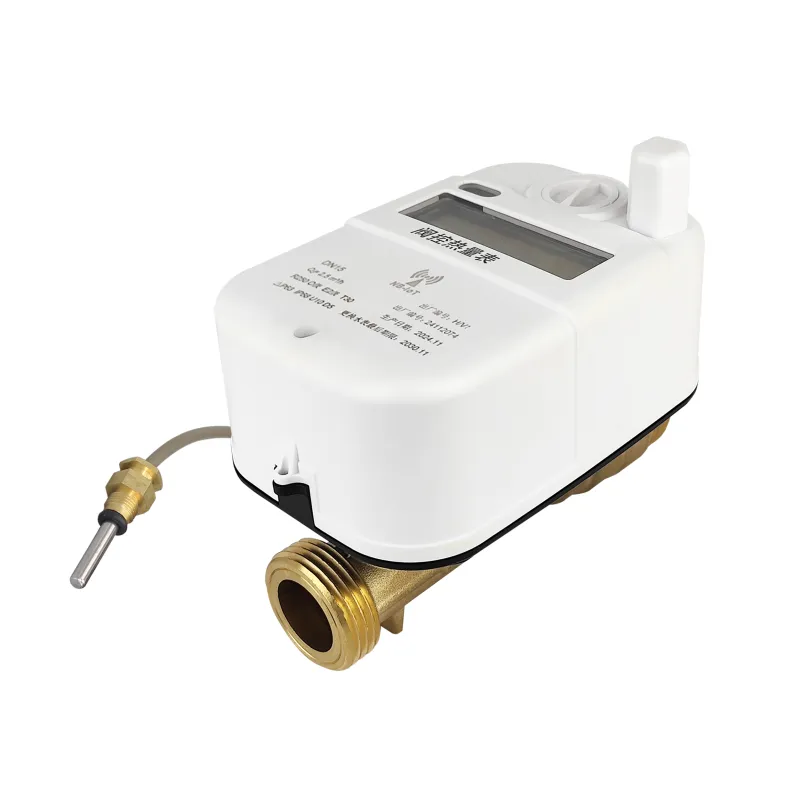
Analyze Fluid Properties and Process Conditions
Start by assessing the fluid’s key properties: conductivity, viscosity, temperature, pressure, and cleanliness. Temperature fluctuations can induce up to a ±2% accuracy shift across flow regimes—especially undermining stability in low-flow or transitional conditions. Viscosity directly affects pressure drop and must be accounted for during calibration; high-viscosity fluids may require specialized meter designs or corrections.
Fluid cleanliness is critical: particles smaller than 200 microns risk fouling sensors and causing measurement drift. Dissolved gases, suspended solids, or slurries further complicate performance—particularly when concentrations exceed thresholds that interfere with sensing mechanisms (e.g., >15% vol solids degrades most inferential meters).
Evaluate Reynolds number and effects of solids, gases, or slurries on industrial flow meter performance
Reynolds number (Re) determines flow regime behavior and strongly influences linearity. Below Re = 2000, laminar flow dominates and introduces drift in velocity-based meters unless compensated. Solids concentrations above 15% volume fraction typically degrade signal integrity and accelerate wear—especially in turbine or vortex devices. High-gas-content flows (e.g., two-phase or aerated liquids) demand specialized techniques like dual-sensor ultrasonic or Coriolis meters capable of distinguishing phase dynamics; standard electromagnetic or turbine meters will produce unreliable readings under such conditions.
Define Measurement Requirements for Industrial Flow Meter Selection
Before selecting an industrial flow meter, precisely define your measurement requirements—not just as technical specs, but as operational needs. Begin with accuracy, expressed consistently as a percentage of reading (AR), calibrated span, or full scale—depending on how your process validates performance. Specify acceptable error at minimum, normal, and maximum flow rates, since many meters perform best near mid-range and deteriorate at extremes.
Repeatability, often more vital than absolute accuracy for closed-loop control, reflects consistency under identical conditions. A repeatability of ≤0.1% is typical for high-integrity applications.
Turndown ratio—the span between maximum and minimum flow measurable within specification—is essential for variable processes. While custody transfer may require 100:1 (Coriolis), stable operations may only need 3:1–10:1 (vortex or differential pressure). Oversizing or undersizing based on inaccurate flow profiling leads to poor resolution, excessive pressure loss, or premature failure.
Typical industrial benchmarks range from ±0.1% to ±2% accuracy, repeatability within 0.1%, and turndown ratios spanning 3:1 to 100:1—selected not by default, but by matching variability in actual operating conditions.
Match Industrial Flow Meter Types to Application Needs
Selecting the right industrial flow meter means aligning technology strengths with real-world constraints: fluid conductivity, phase composition, contamination risk, required accuracy, and maintenance tolerance.
Compare electromagnetic, Coriolis, ultrasonic, turbine, and vortex meters by use case
- Electromagnetic meters deliver high accuracy for conductive liquids—including abrasive slurries and wastewater—and are insensitive to viscosity or density changes. They fail with hydrocarbons, gases, or non-conductive fluids. Their robustness in harsh environments makes them common in chemical processing and municipal water systems, where measurement errors cost industry an estimated $740 k annually (Ponemon Institute, 2023).
- Coriolis meters measure true mass flow and density simultaneously, making them ideal for custody transfer, batching, and applications with variable composition (e.g., blending, API dosing). They handle viscous, dirty, or multiphase flows—but become less accurate below ~0.1% of full scale and add significant pressure drop in large-line installations.
- Ultrasonic meters, especially clamp-on variants, offer non-intrusive installation and broad fluid compatibility—including clean liquids and gases. Time-of-flight types excel in large-diameter water or compressed air lines where minimizing pressure loss is critical; Doppler versions suit slurry applications but sacrifice precision.
- Turbine meters provide excellent accuracy (±0.5%) and repeatability for clean, low-viscosity liquids like fuels or solvents. However, they’re highly sensitive to particulates, pulsation, and bearing wear—making them unsuitable for slurries or unfiltered streams.
- Vortex meters deliver reliable volumetric flow data for saturated steam, compressed air, and natural gas—offering low maintenance and good turndown (typically 20:1). They require fully developed, swirl-free flow profiles and perform poorly in vibrating or low-Re environments.
Each technology’s inherent turndown capability—Coriolis (up to 100:1), vortex (20:1), turbine (10:1–20:1)—must be weighed against expected flow variability. Matching these attributes to your fluid’s physical behavior ensures long-term reliability without over-engineering.
Verify Installation, Compliance, and Environmental Compatibility
Address straight-run requirements, orientation, space constraints, and flow disturbances
Proper installation is foundational to accuracy. Most flow meters require stabilized, symmetrical velocity profiles—achieved through adequate straight-run lengths: typically 10–20 pipe diameters upstream and 5 downstream, though some technologies (e.g., ultrasonic with flow conditioners or Coriolis) tolerate shorter runs. Orientation matters: Coriolis meters function reliably in any plane, while vortex and differential-pressure devices often require horizontal mounting to avoid condensate pooling or sediment accumulation.
In retrofits or confined spaces, compromises are inevitable—but avoid placing meters immediately downstream of elbows, reducers, valves, or pumps. Such disturbances introduce swirl or asymmetry, degrading accuracy by 1%–5% or more, particularly in turbine, ultrasonic, and vortex meters. A pre-installation site survey—documenting piping layout, clearance, vibration sources, and ambient conditions—helps determine whether built-in flow conditioning or alternative meter selection is warranted. Skipping this step risks post-commissioning recalibration, downtime, or replacement.
Confirm compliance with hygiene (e.g., FDA), safety (e.g., ATEX), and functional safety (e.g., SIL) standards
Regulatory alignment must begin at selection—not after installation. In food, beverage, dairy, and pharmaceutical settings, FDA 21 CFR 177.2600, 3-A Sanitary Standards, or EHEDG guidelines mandate wetted materials that are non-toxic, corrosion-resistant, and cleanable—often requiring tri-clamp fittings, polished surfaces (Ra ≤ 0.8 µm), and drainable designs.
For hazardous areas—oil & gas, chemical plants, grain handling—ATEX (EU) or IECEx certification is mandatory. Verify the meter’s gas group (e.g., IIC), temperature class (e.g., T4), and protection type (e.g., Ex d, Ex ia) match zone classification.
Where flow data feeds safety instrumented systems (SIS), IEC 61508 and associated SIL ratings apply. Meters used in SIL 2 or SIL 3 loops must demonstrate proven failure rates and diagnostic coverage—verified via third-party certification (e.g., exida, TÜV). Electrical grounding, cable routing, and environmental sealing (IP67/IP69K) also fall under compliance scope.
Validating all these requirements early prevents costly redesigns, audit failures, or unsafe operation—reinforcing both EEAT credibility and operational resilience.
FAQs
What factors should be considered when analyzing fluid properties for flow meters?
Key factors include fluid conductivity, viscosity, temperature, pressure, and cleanliness. Particles, dissolved gases, and slurries can significantly impact meter accuracy.
How does the Reynolds number affect flow meter performance?
Reynolds number determines flow regime; laminar flow (Re < 2000) introduces drift in velocity-based meters unless compensated, while solids or gas content can degrade signal integrity.
Which industrial flow meter types are suitable for multiphase fluids?
Coriolis and dual-sensor ultrasonic meters are ideal for multiphase fluids as they can distinguish phase dynamics, unlike conventional electromagnetic and turbine meters.
What is the importance of compliance in flow meter installation?
Compliance ensures safety, hygiene, and regulatory standards such as FDA, ATEX, and SIL certifications are met, preventing audit failures and unsafe operations.
Can flow meter accuracy be affected by installation conditions?
Yes, insufficient straight-run distances, poor orientation, and nearby disturbances like elbows or valves can degrade meter accuracy by up to 5%.
Table of Contents
- Analyze Fluid Properties and Process Conditions
- Define Measurement Requirements for Industrial Flow Meter Selection
- Match Industrial Flow Meter Types to Application Needs
- Verify Installation, Compliance, and Environmental Compatibility
-
FAQs
- What factors should be considered when analyzing fluid properties for flow meters?
- How does the Reynolds number affect flow meter performance?
- Which industrial flow meter types are suitable for multiphase fluids?
- What is the importance of compliance in flow meter installation?
- Can flow meter accuracy be affected by installation conditions?