
 EN
EN
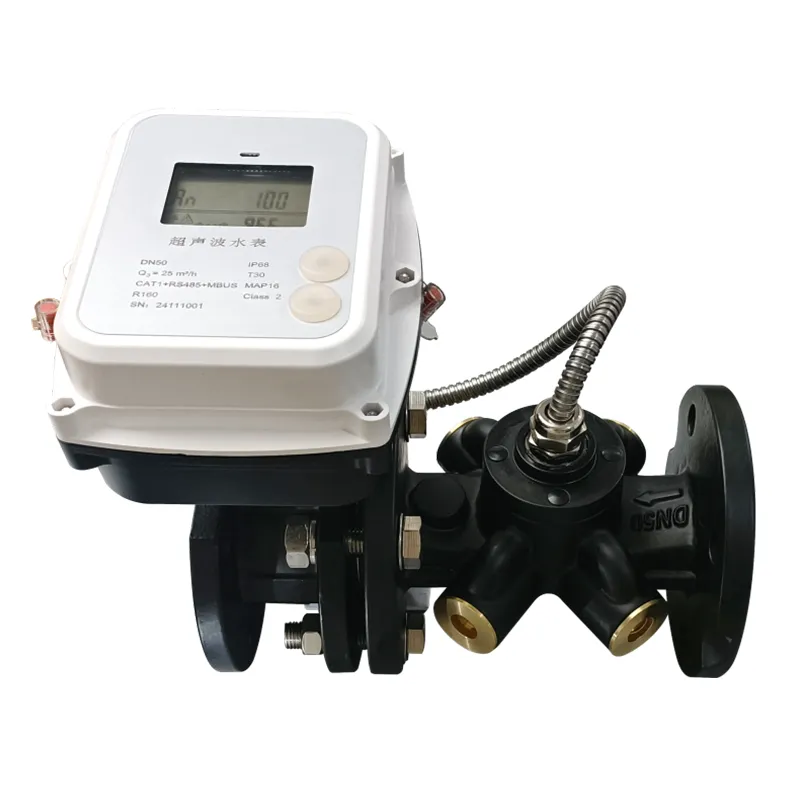
Water utilities and industrial facility managers face mounting pressure to reduce non-revenue water, improve billing accuracy, and extend infrastructure service life. Traditional mechanical water meters depend on moving components such as impellers and reduction gears that wear over time, causing progressive under-registration and revenue loss. Sediment accumulation, scale formation, and corrosion further degrade mechanical meter performance, often within just a few years of installation. A digital flow meter replaces these mechanical components with solid-state sensing technology, eliminating the root causes of accuracy drift and delivering consistent measurement performance throughout the meter's operating life. For procurement professionals evaluating metering technology for large-scale deployments, understanding the specific benefits of a digital flow meter is essential to making informed investment decisions that balance upfront costs against long-term operational returns.
How digital flow meters improve measurement accuracy
The defining advantage of a digital flow meter is its ability to maintain measurement precision across an exceptionally wide flow range. Ultrasonic digital flow meters employ transit-time measurement principles: paired transducers send acoustic signals through the water flow in both upstream and downstream directions, and the resulting time difference is directly proportional to flow velocity. Because this measurement method involves no mechanical resistance, it remains stable from the meter's maximum rated flow down to near-zero flow conditions. A technically competent ultrasonic digital flow meter can achieve Class 2 accuracy with a range ratio of up to R400, meaning accurate measurement from 100% of rated flow all the way down to just 0.25% of that maximum. Mechanical meters, by comparison, typically lose accuracy at low flow rates when the impeller lacks sufficient driving force to rotate smoothly. For utility operators, this low-flow sensitivity translates directly into captured revenue — every drip, trickle, and small-volume consumption event that a mechanical meter would miss is registered and billed by a digital flow meter.
Long-term reliability and reduced maintenance
A digital flow meter contains no moving parts in the flow measurement path, which fundamentally changes its maintenance profile compared to mechanical alternatives. Mechanical meters accumulate wear on bearings, gears, and impellers over time, leading to gradually increasing measurement error and eventual failure. A digital flow meter with ultrasonic sensing elements is inherently immune to these degradation mechanisms. The absence of a spinning impeller also eliminates the pressure drop that mechanical meters introduce into the distribution system, which can be a meaningful consideration in low-pressure networks. Meter bodies rated IP68 can withstand continuous submersion, making a digital flow meter suitable for installation in flooded meter pits or chambers where mechanical meters would be compromised. Battery-powered digital flow meters with optimized power management circuits can operate autonomously for six years or longer without on-site intervention, substantially reducing the field service burden for utilities managing fleets of thousands or tens of thousands of metering points.
Data integration and remote monitoring
Utility operations increasingly rely on data to drive decisions about infrastructure investment, leak detection, and customer service. A digital flow meter serves as more than a measurement device — it functions as a data node within the utility's information network. Standard communication interfaces found on modern digital flow meters include MBUS, RS485, Pulse output, and wireless protocols such as LoRaWAN, NB-IoT, Zigbee, wMBUS, and 4G. These interfaces enable direct integration with automated meter reading and advanced metering infrastructure systems without requiring supplementary signal converters. Remote data access supports continuous consumption monitoring, automated billing, and detection of anomalies including continuous flow (an indicator of downstream leakage), reverse flow events, and pipe burst conditions. Certain digital flow meter configurations incorporate remote valve control functionality, allowing utility operators to connect or disconnect service remotely. This capability is especially valuable in large residential deployments where dispatching technicians for each service change order would be logistically challenging and cost-prohibitive.
Real-world deployment results
The practical value of digital flow meters becomes clear when examining utility-scale deployments rather than laboratory data sheets. In Mexico, more than 13,000 ultrasonic digital flow meters were deployed across two distinct municipal water networks — 10,000 units in one region and an additional 3,000 units in another. These installations replaced aging mechanical meter inventories and provided the utility with consistent billing accuracy under the variable flow conditions typical of Latin American distribution systems. In East Africa, a residential deployment of 20,000 valve control digital flow meters spanning 2023 to 2024 demonstrated the operational advantages of remote service management. The utility was able to activate, suspend, and restore water service without dispatching field crews to individual meter locations — a significant benefit in an area with limited road infrastructure and widely distributed customer connections. These projects collectively show that a digital flow meter delivers tangible operational improvements when deployed at utility scale in diverse geographic and infrastructure environments.
Cost considerations for procurement decisions
Evaluating the total cost of ownership of a digital flow meter requires looking beyond the unit purchase price. Mechanical meters typically present a lower upfront cost, but their accuracy degradation over time means that revenue losses compound as under-registered consumption grows year over year. Maintenance interventions — cleaning, recalibration, repair, or replacement — add direct costs plus the indirect cost of dispatching field crews. A digital flow meter generally involves a higher initial acquisition cost, but the combined effect of sustained measurement accuracy, reduced maintenance frequency, and built-in communication readiness typically produces a lower total cost of ownership over a six to ten-year operating horizon. Buyers planning large-scale meter replacement or new deployment programs are encouraged to request total cost of ownership analyses from potential suppliers, incorporating local labor rates, expected water tariffs, and anticipated meter service life to build a financially sound business case for stakeholders.
Selecting the right digital flow meter
Digital flow meter specifications vary considerably across manufacturers and models, so procurement teams should evaluate candidates against clear technical requirements. Key selection parameters include accuracy class and flow range ratio, nominal pipe diameter (common residential and light commercial sizes include DN15, DN20, and DN25), temperature rating (T30 for cold water, T50 or T70 for hot water service and heat metering applications), communication protocol compatibility with existing or planned AMI infrastructure, and environmental ingress protection rating. For heat metering installations, the meter must comply with applicable thermal energy measurement standards and may need to support combined heating and cooling measurement in a single device. Buyers should verify that the selected digital flow meter carries certifications confirming compliance with ISO 4064 and relevant national standards such as GB/T 778, as regulatory non-compliance can create significant deployment delays and rework costs.
What is the typical operational life of a digital flow meter compared to a mechanical meter?
A digital flow meter using solid-state ultrasonic sensing technology typically has a design life that substantially exceeds that of a mechanical meter operating under the same water quality and flow conditions. Mechanical meters commonly begin showing measurable accuracy drift within two to five years of service as internal moving parts accumulate wear. A properly specified ultrasonic digital flow meter can maintain its rated accuracy class throughout a six-year or longer operational period, with battery life rather than sensor degradation being the primary constraint on field service life. Battery replacement programs allow utilities to extend service intervals further, making a digital flow meter a durable option for long-term infrastructure planning.
Can a digital flow meter help with leak detection?
Yes. Many digital flow meters incorporate alarm functions that monitor for abnormal flow conditions. Continuous low-flow detection can identify a leak downstream of the meter location, while a sudden high-flow spike may indicate a pipe burst. Some meter models can be configured to transmit alerts through their communication interface when these conditions are registered, enabling utility operators or facility managers to initiate corrective action before significant water loss or property damage accumulates. Reverse flow detection is an additional diagnostic feature that can flag unauthorized connections or backflow anomalies in the distribution network.
How does communication protocol choice affect digital flow meter deployment planning?
The communication protocol — whether wired (MBUS, RS485) or wireless (LoRaWAN, NB-IoT, 4G, Zigbee) — directly influences both deployment logistics and ongoing operational expenditure. Wired communication delivers reliable, interference-resistant data transmission but requires physical cable installation, which may be impractical or cost-prohibitive in retrofit scenarios where meters are being installed in existing buildings or underground pits. Wireless protocols eliminate cabling costs and simplify installation but depend on adequate network coverage and may involve recurring subscription fees for cellular or LPWAN network access. Selecting a digital flow meter that supports multiple communication standards provides the flexibility to match the communication method to the specific constraints and cost structure of the deployment environment.
Table of Contents
- How digital flow meters improve measurement accuracy
- Long-term reliability and reduced maintenance
- Data integration and remote monitoring
- Real-world deployment results
- Cost considerations for procurement decisions
- Selecting the right digital flow meter
- Can a digital flow meter help with leak detection?