
 EN
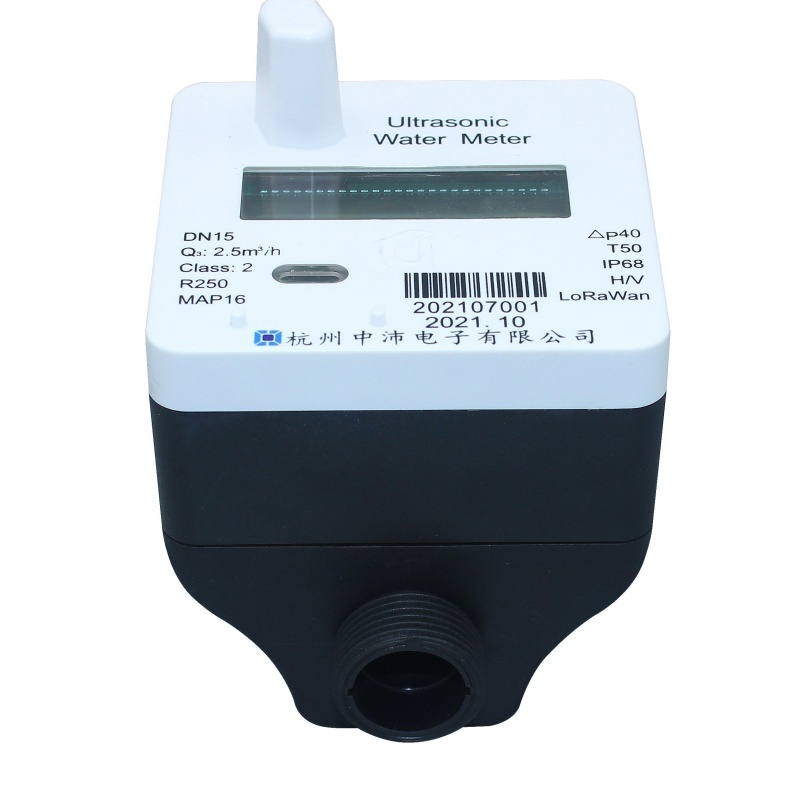
Structural Realities and Fluid Measurement Principles
Navigating the operational realities of municipal distribution networks reveals a fundamental divergence between traditional mechanical meters and solid-state solutions. For over a century, water utilities relied almost exclusively on mechanical displacement meters, such as velocity-based Woltman meters, single-jet impellers, and oscillating piston units. These devices function through physical contact with the fluid stream, where flowing water directly drives gears and registers to calculate volume. However, continuous exposure to waterborne particulate matter, mineral scaling, and pressure fluctuations introduces inevitable physical friction. Over time, internal gears erode and impellers suffer from mechanical fatigue, causing significant measurement drift. Conversely, adopting a solid-state ultrasonic water meter replaces moving parts with an unobstructed flow tube. By emitting high-frequency acoustic signals upstream and downstream, an ultrasonic water meter measures acoustic travel time differences to compute precise flow velocities. Because no moving components restrict or contact the fluid path, an ultrasonic water meter operates completely free from mechanical wear, maintaining metrological stability across years of continuous field operation.
Metrological Precision and Low-Flow Sensitivity Comparison
Evaluating metrological performance across varying flow rates highlights severe technical limitations in traditional mechanical designs. Mechanical water meters require a minimum initial torque to overcome internal gear friction and set impellers in motion. As a result, low-velocity flows—such as subtle pipe joint seepage, slow toilet tank leaks, and gradual valve drips—fail to turn the mechanical gears, leaving substantial volumes of water completely unrecorded. In stark contrast, an advanced ultrasonic water meter utilizes high-frequency acoustic transducers capable of detecting tiny acoustic phase shifts caused by fractional fluid movement. This enables an ultrasonic water meter to achieve dynamic turndown ratios as wide as R400 while maintaining Class 2 accuracy standards. By accurately capturing extremely low starting flows that mechanical meters routinely miss, deploying a precision ultrasonic water meter ensures total volumetric accountability across both residential connection points and large-diameter industrial supply mains.
Financial Impacts on Non-Revenue Water and Long-Term TCO
From an economic perspective, comparing initial procurement price against long-term total cost of ownership reveals a common financial trap for utility managers. While mechanical meters offer a lower initial unit purchase cost, their progressive accuracy degradation creates a growing financial drain through non-revenue water losses. As mechanical components wear down over three to five years, unbilled water consumption steadily increases, forcing utilities to absorb unrecoverable operational losses or prematurely replace aging meters. A solid-state ultrasonic water meter eliminates this hidden cost trajectory. Because an ultrasonic water meter experiences zero mechanical degradation, its measurement baseline remains consistent throughout a 10-to-15-year operational lifespan. Field data from utility infrastructure upgrades confirms that the initial capital expenditure of installing an ultrasonic water meter is rapidly offset by sustained revenue recovery, reduced field maintenance calls, and eliminated premature replacement cycles, delivering superior return on investment over the equipment lifecycle.
Smart Grid Integration and Automated Remote Telemetry
Modern utility management requires continuous, actionable grid data rather than passive monthly readings. Traditional mechanical meters present major bottlenecks for digital transformation, often requiring retrofitted external optical or magnetic pulse pick-ups that are vulnerable to environmental moisture and magnetic tampering. Conversely, an IoT-ready ultrasonic water meter is engineered from the ground up as a fully digital network node. Featuring embedded communication protocols such as LoRaWAN, NB-IoT, M-Bus, and RS485, a connected ultrasonic water meter streams real-time consumption data, reverse flow events, and pipe freeze warnings directly into Advanced Metering Infrastructure software. Furthermore, onboard microprocessors continuously run self-diagnostics to detect air in pipes, signal disruption, or illegal magnetic tampering. Transitioning to a network-native ultrasonic water meter equips water authorities with granular data analytics, enabling automated billing, immediate leak localization, and proactive grid capacity management without manual field intervention.
Environmental Durability and Global Supply Chain Excellence
Deploying metering hardware in subterranean vaults, outdoor pits, and humid tropical climates demands exceptional structural resilience. Mechanical meter housings frequently suffer from fogged display dials, leaking gland seals, and body corrosion that compromise legibility and structural integrity. A commercial-grade ultrasonic water meter overcomes these harsh conditions through IP68-rated hermetic sealing, corrosion-resistant brass or engineered alloy construction, and heavy-duty glass displays. Driven by ultra-low-power electronic circuitry and high-capacity lithium battery technology, a standalone ultrasonic water meter operates reliably for up to 15 years without external power connections or battery changes. Advanced models also integrate motorized control valves directly into the flow body, allowing remote shut-offs and prepaid water allocation management. Delivering this level of acoustic precision, battery efficiency, and rugged construction requires advanced manufacturing capabilities. Drawing on over 17 years of dedicated ultrasonic engineering experience, ZPMETER maintains comprehensive in-house R&D, specialized tooling, automated assembly lines, and full OEM/ODM supply chain services, empowering global utilities with durable, high-performance metering solutions tailored to demanding field environments.