
 EN
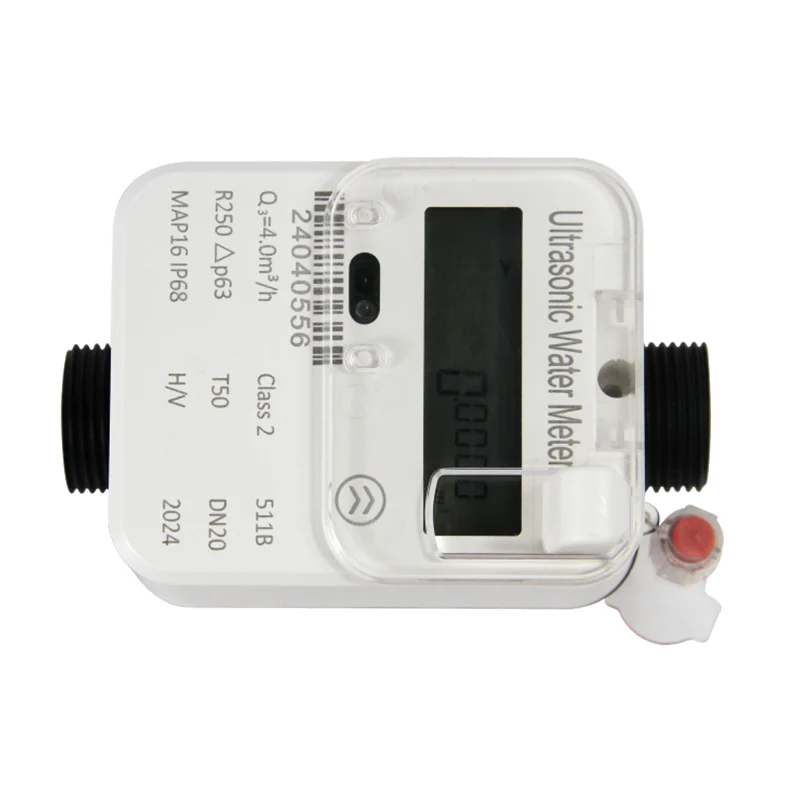
Escaping Mechanical Fatigue and Securing Long-Term Measurement Stability
Municipal water networks and industrial facility managers have long grappled with the inherent flaws of mechanical water meters. For decades, mechanical displacement meters relying on rotating impellers, oscillating pistons, and intricate gear trains served as the global standard. However, field data from distribution systems reveals an unavoidable pattern: mechanical components continuously degrade when exposed to suspended solids, mineral scaling, and hydraulic shock. Over several years of continuous operation, physical wear causes substantial measurement drift, particularly at low flow rates where micro-leaks escape registration. Upgrading to a modern digital water meter resolves this challenge at the architectural level by transitioning to solid-state flow sensing. Operating without moving parts, an advanced digital water meter utilizes transit-time ultrasonic sound waves to measure fluid velocity directly. This completely static construction eliminates physical friction, delivering sustained Class 2 accuracy and wide dynamic ranges up to R400 throughout its entire operational lifecycle. By eliminating physical wear, utilities protect their billing integrity and prevent progressive non-revenue water loss across distributed residential and commercial grids.
Driving Utility ROI by Eliminating Non-Revenue Water Losses
The economic impact of unrecorded water consumption represents one of the largest financial drains on municipal water authorities worldwide. Traditional mechanical meters often fail to capture flow below specific minimum thresholds ($Q_1$), meaning subtle pipe joint seepage, running toilets, and slow fill valves go completely unbilled. Over thousands of connections, these unrecorded volumes accumulate into significant non-revenue water (NRW) figures that erode operating margins. Implementing a precision-engineered digital water meter addresses this revenue gap by providing high sensitivity down to fractional flow velocities. Field deployments across urban utility districts demonstrate that solid-state metering captures low-flow leakage that mechanical meters routinely miss. Furthermore, because a digital water meter does not suffer from internal gear degradation, the initial revenue recovery achieved at installation remains stable over a decade later. This long-term measurement consistency dramatically shortens the payback period of meter replacement projects, transforming an infrastructure upgrade from an operational expense into a high-yield capital investment.
Streamlining Operational Workflows with Automated Remote Telemetry
Manual meter reading imposes severe operational costs, logistics challenges, and safety risks on water utilities. Sending field crews to open subterranean meter boxes, combat harsh weather, and transcribe manual dial readings introduces human data entry errors and high labor expenses. Transitioning to a network-connected digital water meter replaces manual field inspection with automated, high-frequency telemetry data streams. Modern units incorporate versatile communication modules, including LoRaWAN, NB-IoT, M-Bus, and RS485, enabling smooth integration into Advanced Metering Infrastructure (AMI) and Automatic Meter Reading (AMR) management software. Water operators gain access to real-time hourly consumption metrics, automated daily billing cycles, and centralized network analysis without dispatching service vehicles into the field. By utilizing a telemetry-ready digital water meter, water suppliers convert raw flow data into actionable operational intelligence, streamlining billing accuracy while driving the digital transformation of modern smart water utilities.
Proactive Grid Resilience Through Real-Time Diagnostics and Alarm Architecture
Beyond accumulating total volumetric usage, a modern digital water meter acts as an active diagnostic node across the distribution network. Integrated microprocessors continuously monitor acoustic signal integrity, fluid temperature variations, reverse flow events, and battery voltage levels. When anomalous conditions arise—such as continuous low-velocity flow indicating a household leak, backflow risking system contamination, or freezing temperatures threatening pipe integrity—the digital water meter immediately triggers diagnostic alarm flags. These alerts render locally on high-contrast LCD screens and transmit instantly across LPWAN or cellular channels to central operations dashboards. Additionally, onboard non-volatile memory chips preserve over 24 months of hourly, daily, and monthly historical usage logs. This transparent, tamper-proof data archive provides water authorities with solid historical evidence to resolve billing disputes, trace distribution anomalies, and safeguard public water resources proactively.
Industrial-Grade Engineering and Sustainable Hardware Reliability
Water infrastructure hardware must withstand harsh environmental conditions, including prolonged submersion in flooded meter vaults, high ambient humidity, corrosive soil chemistry, and direct UV radiation. Installing low-grade hardware inevitably leads to premature field failures, frequent battery replacements, and rising total cost of ownership. High-performance units solve this by employing IP68-rated hermetically sealed enclosures, corrosion-resistant brass or engineered alloy bodies, and toughened glass display panels that prevent moisture ingress and mechanical damage. Powered by ultra-low-power electronic circuitry paired with high-capacity lithium batteries, a standalone digital water meter operates continuously for 10 to 15 years without external power connections or maintenance intervention. Advanced configurations also integrate motorized control valves directly into the flow body, enabling remote shut-offs, flow throttling, and prepaid metering allocations. Achieving this balance of precision sensing, long battery life, and environmental durability requires rigorous manufacturing standards. ZPMETER brings over 17 years of specialized ultrasonic engineering experience, combining in-house tooling, dedicated production lines, and comprehensive OEM/ODM supply chain capabilities to deliver certified, highly reliable metering solutions to global utilities and industrial partners.
Table of Contents
- Escaping Mechanical Fatigue and Securing Long-Term Measurement Stability
- Driving Utility ROI by Eliminating Non-Revenue Water Losses
- Streamlining Operational Workflows with Automated Remote Telemetry
- Proactive Grid Resilience Through Real-Time Diagnostics and Alarm Architecture
- Industrial-Grade Engineering and Sustainable Hardware Reliability