
 EN
EN
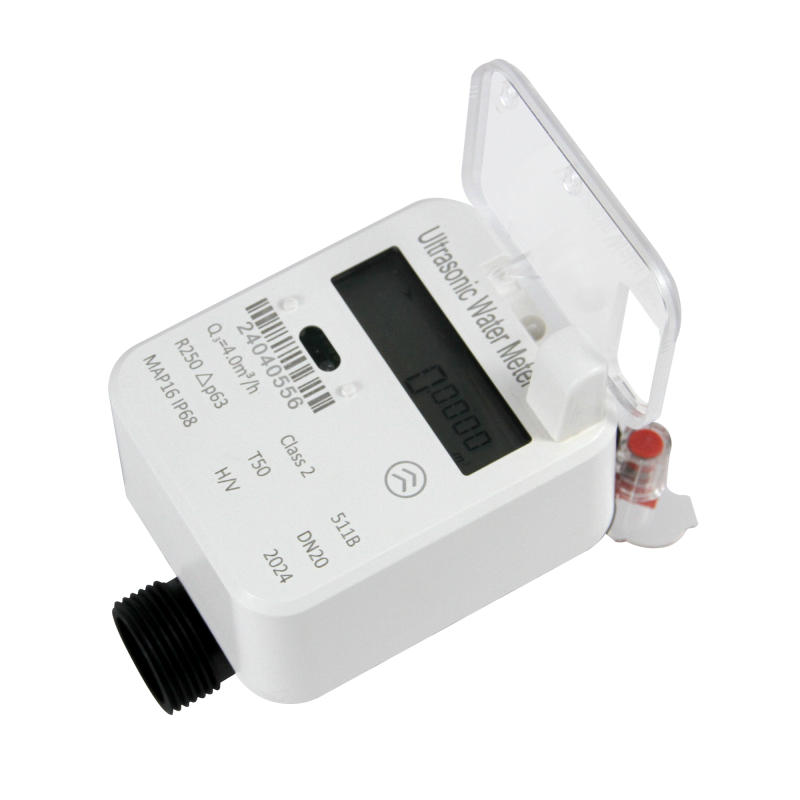
Superior Accuracy and Measurement Consistency
High precision under varying flow conditions with ultrasonic technology
Ultrasonic water meters stay within about 1% accuracy even when dealing with all sorts of messy water situations and changing pressures, something that was confirmed in the big 2024 study on measuring accuracy. Mechanical meters get messed up by things like pipe shaking or junk floating through them, but these ultrasonic ones work differently. They basically listen to the water as it moves past, calculating flow rates based on sound waves instead of actually touching the water itself. This means they keep performing reliably even when conditions aren't perfect, which is pretty important for real world applications where everything rarely goes exactly according to plan.
Field evidence: 98.7% accuracy retention after 5 years (AWWA study)
Independent field trials by the American Water Works Association (AWWA 2023) show ultrasonic meters retain 98.7% accuracy over 5-year deployments, compared to mechanical counterparts losing 4–6% annually due to gear wear. This long-term stability helps utilities recover $18–$22 per meter each year in previously lost revenue.
Measurement drift in mechanical meters due to internal wear and component degradation
Mechanical meters degrade over time from bearing corrosion, impeller warping under high temperatures, and magnetite buildup that dulls register responsiveness–factors contributing to progressive inaccuracies. For example, bearing corrosion alone can cause up to 23% accuracy loss after 80,000 gallons of usage.
Enhanced sensitivity to low-flow conditions and micro-leak detection
Ultrasonic technology detects flows as low as 0.03 GPM–15 times more sensitive than mechanical diaphragms–enabling identification of leaks equivalent to a dripping faucet (1.5 gallons/day). This capability prevents an estimated 6,000–8,000 gallons of annual water loss per household, significantly improving conservation efforts.
Wider Flow Range and Extended Turndown Ratio Performance
Ultrasonic water meters provide unparalleled measurement capabilities across diverse flow conditions, from trickling leaks to high-volume consumption. Unlike mechanical meters that become unreliable below 20% capacity, industry studies confirm ultrasonic models maintain �1% accuracy even at 2% flow rates due to turndown ratios exceeding 100:1.
Performance Comparison Across Low, Medium, and High Flow Conditions
Field tests demonstrate 98.5% accuracy consistency in ultrasonic meters versus mechanical devices– 8–12% error margins during low-flow periods. The discrepancy arises because mechanical impellers struggle to rotate reliably at flow velocities below 0.3 m/s, leading to underregistration.
Limitations of Mechanical Meters Under Low-Flow and Turbulent Conditions
Traditional meters lose rotational energy in turbulent flows, causing underreporting by 15–20% during pressure fluctuations. Particulate accumulation accelerates this decline, with mechanical meters in municipal systems showing average annual degradation rates of 3%.
Ultrasonic Meters' Extended Turndown Ratio Enables Precise Measurement at Minimal Flows
Thanks to improved signal processing technology, ultrasonic meters are now capable of picking up flow rates down to just 0.01 meters per second. This means they can spot small leaks that might be wasting anywhere from 5 to 7 gallons each day something traditional mechanical meters typically miss for weeks or even months before flagging any issue. The turndown capability stands at around 100 to 1, so one ultrasonic device actually replaces several different mechanical models. This not only makes designing systems much simpler but also cuts down on the hassle of managing all those separate parts in inventory.
Durability and Reduced Maintenance Due to No Moving Parts
Absence of moving parts eliminates mechanical wear and failure points
Ultrasonic water meters last longer because they ditch traditional gears and pistons for solid state sensors instead. Since these meters don't actually touch the water flowing through them and there's absolutely no friction during measurements, problems like jams or rust simply don't happen anymore. Industrial studies back this up too. Equipment that doesn't have any moving components tends to break down about 83 percent less often within a decade compared to older models. That kind of reliability makes a real difference for facilities where downtime costs money and maintenance budgets are tight.
Long-term reliability and reduced risk of inaccuracies from component degradation
Testing data shows ultrasonic meters sustain ±1% accuracy for 12+ years, far outperforming mechanical meters that degrade 2–4% annually. Hermetically sealed chambers prevent sand, rust, or mineral deposits from interfering with measurements–a key benefit in regions with hard water or particulate-laden supplies.
Minimal maintenance requirements lower service frequency and labor costs
Utilities report 70% fewer field interventions with ultrasonic meters. Without the need for lubrication, impeller replacements, or recalibration, operational burdens decrease significantly, resulting in a 65% reduction in technician dispatches and 55% lower annual maintenance budgets. Meter shop overhaul costs are effectively eliminated.
Lifecycle cost savings from reduced interventions over 10 years
According to the 2025 Water Infrastructure Report, deploying 100 ultrasonic meters yields $18,400 in savings compared to mechanical alternatives over a decade–factoring in reduced labor, fewer replacements, and minimized revenue loss from underregistration.
Immunity to Installation Effects and Flow Profile Disturbances
Mechanical Meters' Susceptibility to Upstream Piping and Flow Disturbances
Traditional mechanical meters require 10–15 pipe diameters of straight upstream piping to function accurately. When bends, valves, or pumps disrupt flow profiles, rotating impellers respond inconsistently, introducing 17–23% measurement errors (International Water Association 2022). This sensitivity often necessitates costly installation modifications and frequent recalibrations.
Non-Intrusive Design of Ultrasonic Meters Ensures Stable Performance Despite Installation Challenges
Ultrasonic flow meters work by measuring how long sound waves take to travel through a pipe, instead of relying on moving parts like traditional mechanical meters do. This means they don't care much about where they're placed or if there's turbulence going on around them. Real world testing has found that these devices stay pretty accurate even when put right after those sharp 90 degree bends in piping systems. The error rate stays below 1.5%, which is way better than what we see from mechanical meters under similar circumstances, where errors can jump up to around 11.6%. Another big plus for ultrasonic tech is their completely open path design, so they fit into cramped installation spots without any issues. Most models keep accuracy between 98.4% and 99.1% even when faced with all sorts of flow irregularities according to research published in Flow Measurement Journal last year.
Smart Capabilities and Remote Monitoring for Proactive Water Management
Integrated leak, freeze, and burst detection through continuous digital monitoring
Ultrasonic meters leverage real-time digital sensing to monitor flow 24/7, detecting leaks as small as 0.5 gallons per minute within 15 minutes. Temperature compensation enables early freeze alerts, while sudden pressure spikes indicative of pipe bursts trigger immediate notifications–capabilities absent in mechanical meters requiring manual inspection.
Real-time data transmission and remote reading for efficient utility operations
Integrated into advanced metering infrastructure (AMI), ultrasonic meters transmit consumption data hourly via encrypted LoRaWAN or cellular networks. Utilities access live dashboards to track usage patterns and respond quickly to anomalies, reducing operational costs by 37% compared to traditional meter reading methods (AWIA 2023).
Water conservation benefits via early leak detection and usage analytics
Smart meter deployments have helped municipalities reduce non-revenue water loss by 18–22%, according to the 2024 Urban Water Management Report. Consumers receive automated mobile alerts for potential leaks, while utilities use granular usage analytics to optimize pressure zones and cut distribution losses by 28% annually in pilot programs.
Frequently Asked Questions
What is the accuracy of ultrasonic water meters?
Ultrasonic water meters have a high accuracy rate of about 1% even under varying flow conditions and pressures.
How do ultrasonic meters compare to mechanical meters over time?
Ultrasonic meters retain 98.7% accuracy over 5 years, whereas mechanical meters can lose 4–6% annually due to gear wear.
Can ultrasonic technology detect micro-leaks?
Yes, ultrasonic meters can detect flows as low as 0.03 GPM, identifying micro-leaks equivalent to a dripping faucet.
Why are ultrasonic meters more reliable than mechanical meters?
Ultrasonic meters do not have moving parts, eliminating mechanical wear and component degradation, resulting in longer-lasting accuracy.
What are the smart capabilities of ultrasonic water meters?
Ultrasonic meters offer real-time monitoring, remote data transmission, and analytics to support leak detection and efficient water management.
Table of Contents
- Superior Accuracy and Measurement Consistency
- Wider Flow Range and Extended Turndown Ratio Performance
- Durability and Reduced Maintenance Due to No Moving Parts
- Immunity to Installation Effects and Flow Profile Disturbances
- Smart Capabilities and Remote Monitoring for Proactive Water Management
- Frequently Asked Questions