
 EN
EN
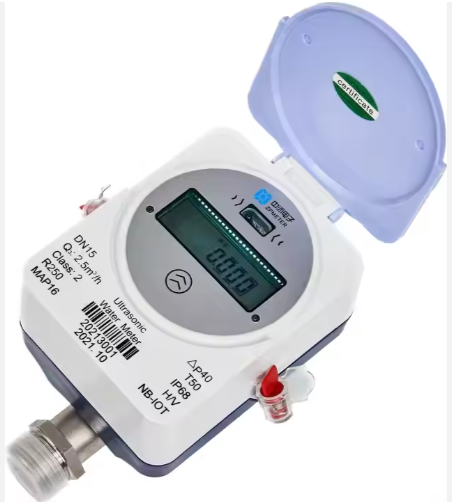
How Remote Water Meter Technology Enables Efficient Water Management
How Remote Water Meter Reading Enables Automated Data Collection
Water meters that work remotely get rid of the need for people to check them manually since they send usage info straight to the utility companies. AMR systems take readings roughly every 15 to 60 minutes, which cuts down on mistakes made by humans by about 92 percent according to research from Ponemon Institute back in 2023. With all this frequent data coming in, water utilities can spot leaks much better and only send crews out when something looks really off track beyond what's normal. This means fewer wasted trips and saves money overall for everyone involved.
The Role of IoT-Based Water Monitoring Systems in Modern Utilities
Smart monitoring systems based on IoT technology let utility companies keep track of water consumption in real time throughout homes, businesses, and factories. When combined with meter readings, local weather predictions, and existing infrastructure details, these smart platforms can actually foresee when demand will jump and then tweak the pressure in the system accordingly. This helps reduce strain on pipes by about one third according to recent tests. Looking at actual results from cities that implemented such systems back in 2023, those places saw their water loss problems drop by nearly 18 percent just half a year after installation started.
Communication Technologies for Remote Meters (RF, Cellular, LoRaWAN)
Remote water meters rely on three primary wireless protocols:
- RF (Radio Frequency): Short-range (<1 km), best suited for dense urban environments
- Cellular (4G/5G): Offers wide coverage and high bandwidth for real-time analytics
- LoRaWAN: Low-power, long-range (15+ km) connectivity ideal for rural or dispersed installations
Hybrid networks combining cellular and LoRaWAN achieved 99.8% data transmission success in 2024 field trials, significantly outperforming single-technology setups at 89%.
Residential Applications: Monitoring Multi-Unit and Household Water Use
Real-Time Water Consumption Monitoring for Household Efficiency
With 15-minute interval data, remote meters allow households to track usage down to specific activities like showering or dishwashing. This visibility empowers families to adjust inefficient habits, leading to annual water savings of 12–18%
Multi-Unit Property Water Monitoring and Tenant Water Consumption Tracking
Property managers use submetered remote systems to allocate water costs fairly in multi-unit buildings. After implementing per-tenant tracking via web dashboards, a 2023 multifamily housing survey reported a 92% reduction in billing disputes.
Leak Detection Using Smart Water Meters in Homes
Smart meters detect abnormal flow patterns–indicative of leaks–50% faster than manual checks. Trials show a median detection time of 48 hours for pipe bursts, helping homeowners avoid structural damage averaging $7,400 per incident (Property Damage Report 2024).
Case Study: Automated Billing and Data Transmission in Apartment Complexes
A 300-unit Chicago high-rise replaced manual readings with cellular-connected remote meters, cutting administrative costs by 30% ($8,100/month). Tenants now receive real-time consumption alerts through a mobile app, enhancing engagement and accountability.
Commercial and Industrial Use Cases for Remote Water Meters
Advanced Metering Infrastructure (AMI) in Large-Scale Operations
Many industrial sites now install AMI enabled remote meters for automated water monitoring throughout their complex operations. According to Future Market Insights from last year, these connected systems cut down on meter reading mistakes by around 92%. They can handle impressive flow rates too, going as high as 5,000 gallons every minute. The inclusion of built in pressure sensors along with tamper detection features makes these systems much safer and more dependable. This is particularly valuable in places like oil refineries where precision matters, large scale manufacturing facilities, and sprawling campus type buildings that need constant water management oversight.
Detection of Water Leakage and Abnormal Usage in Industrial Settings
Continuous flow monitoring enables IoT-based meters to identify leaks 67% faster than conventional systems. According to a 2024 water management study, smart detection helped facilities save $740,000 annually by preventing 3.8 million gallons of wastewater. In chemical processing plants, thermal imaging integrations now detect hidden leaks with 15-millimeter precision.
Real-Time Data Collection for Improved Operational Efficiency
Half-hourly consumption updates allow factories to optimize cooling cycles and rinse processes. Food processing plants leveraging this data reduced per-unit water costs by 18% through improved pump scheduling aligned with actual usage patterns.
Cost Analysis: High Initial Investment vs. Long-Term Savings
Industrial remote metering systems require upfront investments of $18,000–$45,000, but the Urban Water Institute reports 94% of adopters achieve payback within 26 months through labor reductions and avoided wastewater penalties. Facilities consuming over 10 million gallons monthly typically realize a 4:1 ROI over five years.
Smart Cities and Municipal Water Management with Remote Metering
Wireless Water Meter Data Transmission in Municipal Networks
More cities are turning to wireless solutions like LoRaWAN, cellular networks, and RF technology to send meter readings across town without anyone needing to actually visit each location. The savings from this approach can cut down on operating expenses anywhere between 22% and 35% when compared with old fashioned manual checks according to research published by BCC in 2024. Take LoRaWAN as an example. These networks keep working at around 98% effectiveness rate even when installed in crowded city centers where signal interference would normally be a problem. That kind of reliability makes it possible for utility companies to monitor their entire distribution network without gaps or blind spots appearing suddenly during peak usage times.
Scalability of Remote Monitoring Across Urban Water Systems
IoT-based metering systems are modular, enabling smooth expansion from pilot neighborhoods to city-wide rollouts. An analysis of 12 European smart cities showed that districts using unified communication standards reduced non-revenue water losses by 18% within 18 months. This scalability ensures consistent data integration across treatment plants, pumping stations, and end-user connections.
Integration with AI-Driven Analytics for Predictive Maintenance
Machine learning models leverage remote meter data to predict pipe failures 7–10 days in advance with 89% accuracy. By analyzing flow rates, pressure fluctuations, and historical leak data, algorithms prioritize maintenance tasks. Cities using AI-driven systems report 40% faster leak response times and 31% lower repair costs than those relying on reactive approaches.
Supporting Sustainable Water Policies Through Centralized Data
Centralized analytics empower policymakers to assess conservation programs and manage allocations during droughts. During California's 2022 drought, aggregated meter data revealed excessive agricultural usage, prompting officials to redirect 740 million gallons to residential areas without affecting crop yields. Such evidence-based decisions support UN SDG 6 goals for sustainable urban water management.
Why Remote Water Meters Outperform Traditional Metering Systems
Automated Meter Reading Reduces Labor Costs and Human Error
Manual meter reading historically accounted for 35–50% of utility operating budgets. Remote systems reduce field workforce needs by 80% while achieving 99.8% billing accuracy (WaterTech Solutions 2023). Digital transmission eliminates the ±2% error rate associated with analog dials and manual entry.
Superior Data Accuracy and Frequency in Remote Systems
Remote meters transmit data hourly versus monthly manual reads, enabling leak detection within 24 hours instead of 60+ days. High-resolution monitoring helps commercial users spot irregularities 94% faster (IoT Water Management studies), allowing timely intervention before minor issues escalate.
Overcoming Industry Resistance Despite Proven ROI
Despite implementation costs of $120–$180 per meter, most utilities recoup investments within 36 months. A 2024 California Water District case study demonstrated a 214% ROI over five years through labor savings, optimized pressure control, and 12% water conservation–outcomes unattainable with analog infrastructure.
FAQ
What is the purpose of remote water meter technology?
Remote water meter technology facilitates efficient water management by allowing automated data collection and reducing human intervention, errors, and operational costs.
How do remote water meters help in leak detection?
These meters detect leaks faster than manual checks by monitoring flow patterns continuously. This quick detection prevents potential structural damages and reduces water loss.
What communication technologies are used by remote water meters?
Remote water meters utilize RF, Cellular (4G/5G), and LoRaWAN protocols, each serving specific environments for optimal data transmission.
Why are smart cities adopting remote water metering systems?
Smart cities benefit from enhanced water management capabilities, reduced expenses, and improved scalability, along with support for sustainable urban water policies.
Table of Contents
- How Remote Water Meter Technology Enables Efficient Water Management
- Residential Applications: Monitoring Multi-Unit and Household Water Use
- Commercial and Industrial Use Cases for Remote Water Meters
- Smart Cities and Municipal Water Management with Remote Metering
- Why Remote Water Meters Outperform Traditional Metering Systems
- FAQ