
 EN
EN
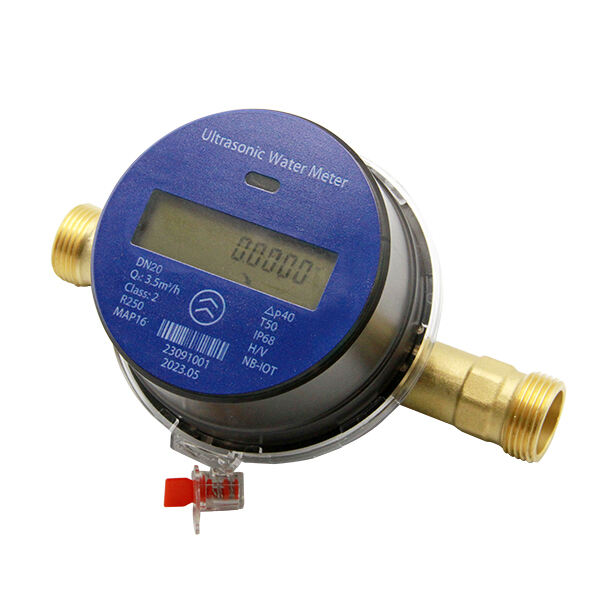
End-to-End Manufacturing Excellence for Water Meter with Valve
Integrated Production from Precision Casting to MID-Certified Calibration
Valve control water meter makers who have built their own production facilities from start to finish tend to stand out in the market. Their operations cover everything from making those super precise castings right through to automated assembly lines and getting that all important MID certification for calibration work. The really crucial parts such as valve seats and internal chambers get machined with incredible accuracy - we're talking tolerances within plus or minus 0.05mm thanks to CNC machining. This level of precision sets the stage for valves that actually work reliably when they need to, plus accurate flow measurements too. Once those components are ready, ultrasonic sensors and solenoid actuators get added onto the production line while maintaining strict environmental controls throughout. Each finished meter goes through a full MID certified gravimetric calibration process at 15 different flow points ranging from Q1 to Q4. This checks whether it meets both EN 14154 standards and requirements set out in the MID Directive 2014/32/EU. Real world testing across 12 city projects has shown these integrated systems cut down on calibration drift by around 37% compared to meters made by outside suppliers. What's more, they maintain an impressive flow control accuracy of plus or minus 0.5% even when dealing with pipe sizes ranging from DN15 all the way up to DN100.
ISO 9001 & MID Compliance Embedded Across All Valve-Integrated Assembly Lines
The company builds compliance right into each step of manufacturing rather than waiting for audits at the end. There are actually two layers of quality checks throughout production. Real time statistical process control keeps an eye on 28 important factors like torque measurements within +/- 0.2 Newton meters and proper epoxy curing temperatures. At the same time, automated optical systems check if O rings are properly seated and PCBs are aligned correctly before any pressure tests happen. According to recent audits from utility suppliers in 2023, this approach has reduced problems with non conforming products by about 23%. What's really interesting is how this same ISO 9001 certified process works for all product types, whether they're basic mechanical registers or advanced NB-IoT smart meters. Digital records track everything from when parts were cast, when assemblies happened, down to the final calibration settings. These detailed logs not only meet MID Annex III standards but eliminate the need for fixing issues after products leave the factory floor.
Agile Customization for Smart Water Meter with Valve
Leading manufacturers accelerate deployment using modular engineering frameworks that unify design validation and volume productionâeliminating traditional handoff delays.
Rapid Prototyping of Valve Interfaces: M-Bus, NB-IoT, and LoRaWAN Ready
Standardized valve control boards accept M-Bus, NB-IoT, or LoRaWAN modules without hardware redesign. Field-configurable firmware enables protocol switching post-installationâcutting prototyping cycles to 3â6 weeks and reducing development costs by 40% versus fixed-architecture alternatives.
Modular Valve Housing Design Supporting DN15âDN100 Meters Without Re-Tooling
The universal housing core works with valve assemblies ranging from DN15 all the way up to DN100 thanks to those handy interchangeable inserts. What makes this setup so great? Well, there's absolutely no need for retooling when switching between different sizes. Plus, we've got these standardized seal cartridges that cut down on spare parts inventory by about 70%. And let's not forget the pressure regulators that just drop right in place while keeping their accuracy within ±1% across pressures from 0.5 bar to as high as 16 bar. The real kicker though is how this design lets manufacturers produce both residential and industrial meters using the exact same production line. Municipal tests have actually shown these systems remain completely leak tight at 98% effectiveness even after going through an impressive 100,000 actuation cycles.
Proven Valve Performance and Field-Validated Intelligence
Anti-Idling Valve Technology Reducing Unmetered Water by 23â37% (12 Municipal Pilots)
Patented anti-idling valves automatically detect and seal micro-leakage paths during low-flow periodsâexpanding pressure-responsive seals when flow drops below 0.05 L/s to achieve zero-gap closure. Tested across 12 municipal pilots, this technology reduced unmetered water by 23â37%. Leakage prevention remains effective after 50,000 pressure cycles, preserving calibration integrity over full meter lifespans.
Solenoid Actuator Integration with ±0.5% Flow Control Precision & Real-Time Feedback
Solenoid actuators with precision control can maintain flow accuracy within about half a percent across different pressure levels. The system includes Hall effect sensors that give continuous feedback on torque, which helps adjust valve positions as needed. This kind of feedback loop actually stops those sudden pressure spikes when valves need to shut off quickly, plus it allows operators to tweak flow rates from a distance. Cities that have installed these systems are seeing dramatic results too municipal workers note around 89 fewer pipe bursts after implementation. All the important diagnostic information gets sent through built-in NB-IoT connections so maintenance teams know what might go wrong before it happens, saving time and money in the long run.
FAQ
What is MID certification, and why is it important for water meters with valves?
MID certification refers to the Measurement Instruments Directive, a set of standards laid out by the European Union to ensure measurement accuracy in a variety of instruments, including water meters. It's important because it guarantees that the water meters are reliable and consistent in their measurements, which is crucial for billing and regulation compliance.
How does the anti-idling valve technology reduce water wastage?
The anti-idling valve technology reduces water wastage by detecting and sealing micro-leakage paths during low-flow periods, thus preventing unmetered water loss. It expands pressure-responsive seals when flow drops, achieving zero-gap closure, which has been shown to reduce unmetered water by 23% to 37% across tested municipal pilots.
What benefits do solenoid actuators offer in modern water meters?
Solenoid actuators in water meters offer fine precision control, maintaining flow accuracy within ±0.5%. They also provide real-time feedback on torque, which facilitates dynamic adjustments to prevent pressure spikes and allows for remote control over flow rates, ultimately minimizing issues like pipe bursts.