
 EN
EN
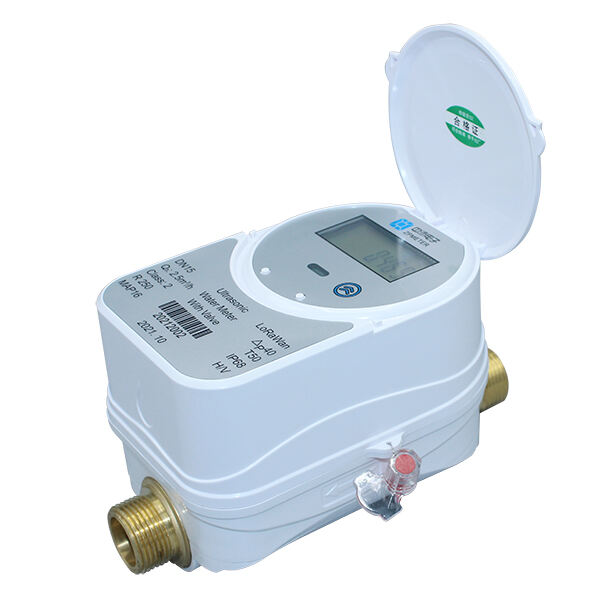
What Makes an Ultrasonic Water Meter Truly High-Precision?
Beyond ±1% R: Why Metrological Traceability and Dual-Path Signal Processing Define Real-World Accuracy
True high-precision in ultrasonic water meters transcends basic ±1% error ratings. Metrological traceability—anchored to institutions like NIST or PTB—ensures calibration integrity across the entire measurement chain, eliminating long-term drift. Dual-path signal processing enhances real-world accuracy by analyzing flow from multiple angles, effectively compensating for turbulence, irregular pipe geometries, and sediment buildup. Meters incorporating both features consistently maintain 0.5% accuracy across a wide velocity range (0.03 m/s to 25 m/s), significantly outperforming mechanical alternatives.
ISO 4064-1:2014 Class B Performance in Action: Stability Under Variable Flow, Temperature, and Pipe Conditions
ISO 4064-1:2014 Class B certification is the benchmark for field-proven stability—not just lab-grade precision. It validates performance under operational stressors where many meters falter:
- Flow stability: 98.7% accuracy retention after five years in municipal systems, even amid pressure fluctuations;
- Temperature immunity: ±0.2% deviation across 0°C–30°C, enabled by embedded thermal compensation algorithms;
-
Pipe adaptability: Consistent readings across diverse pipe materials and diameters via dynamic signal correction.
This certification supports turndown ratios up to 300:1—essential for detecting low-flow leaks that often go unnoticed with less capable devices.
Certified OEM Manufacturing Excellence for Ultrasonic Water Meters
OIML R49 and MID Class B Certification: Non-Negotiables for EU, APAC, and Smart Utility Deployments
OIML R49 and MID Class B certification are mandatory for deployment in regulated markets—including the EU, Australia, Japan, and South Korea. These standards verify accuracy under real-world conditions such as pressure transients, particulate-laden water, and variable installation environments. For smart city initiatives, MID Class B compliance ensures ±1% error tolerance during peak-demand scenarios, directly supporting billing integrity, regulatory compliance, and sustainability goals. Non-compliant meters risk legal penalties, project delays, and revenue leakage.
NIST- or PTB-Traceable Calibration Across the Production Line — From Transducers to Final Assembly
Precision begins at the component level: every transducer undergoes signal verification against NIST- or PTB-traceable reference standards before assembly. This ensures ±0.5°C temperature compensation accuracy—a critical safeguard, since viscosity shifts directly affect ultrasonic wave propagation speed. Final assemblies are tested across 15 calibrated flow points, with certificates documenting full compliance with ISO 4064-1:2014 Class B thresholds. This end-to-end traceability prevents measurement drift over 10-year service lifespans and reduces long-term maintenance costs by 18% compared to non-traceable alternatives.
Smart Customization Capabilities for Ultrasonic Water Meter OEM Integration
Housing Design, Electronics Layout, and Pulse Output Protocols: How Physical Integration Affects Field Accuracy
Physical integration is not ancillary—it’s foundational to field accuracy. Optimized housing design minimizes flow disruption and eliminates vortices that distort transit-time measurements. Strategic electronics placement avoids electromagnetic interference from adjacent infrastructure, while pulse output protocols are pre-aligned with legacy SCADA and AMI systems to prevent data transmission errors. Leading manufacturers validate ±0.5% accuracy retention post-integration using NIST-traceable calibration—and field studies confirm that turbulence-optimized housings preserve ISO 4064-1:2014 Class B performance regardless of pipe orientation or mounting configuration.
Modular Firmware Architecture for Application-Specific Algorithms (e.g., Low-Flow Turbulence Correction)
Modular firmware architecture empowers OEM partners to embed application-specific intelligence without hardware changes. Functions like low-flow turbulence correction, adaptive noise filtering, or demand-profile learning can be deployed via secure over-the-air updates. In high-rise buildings, this capability sustains measurement drift below 0.3%, while in battery-powered AMI networks, algorithmic optimization extends battery life by up to 40%. Utilities integrating firmware-tuned meters report 15% fewer accuracy-related service calls—demonstrating how intelligent software elevates reliability beyond hardware alone.
FAQ Section
What defines high-precision in ultrasonic water meters?
High-precision ultrasonic water meters ensure metrological traceability with minimal long-term drift and leverage dual-path signal processing to analyze flow from multiple angles, guaranteeing consistent accuracy under varying conditions.
What does ISO 4064-1:2014 Class B certification mean?
This certification confirms the meter's stability and performance in real-world conditions, including temperature variations, flow disruptions, and diverse pipe materials, with exceptional accuracy over time.
Why are OIML R49 and MID Class B certifications important?
These certifications are critical for compliance with legal and regulatory standards in markets like the EU, ensuring reliability under operational stress and directly supporting system sustainability and billing integrity.
How does physical integration affect ultrasonic meter accuracy?
Proper housing design, appropriate electronics placement, and optimized pulse output protocols prevent external interference and flow disruptions, preserving high accuracy.
What is the role of modular firmware in ultrasonic water meters?
Modular firmware allows OEMs to customize algorithms such as turbulence correction or noise filtering, enhancing performance and reducing maintenance needs over the meter’s lifespan.