
 EN
EN
A Cautionary Tale from the Mechanical Room
There is a moment in every facility manager's career when they realize the numbers on the energy report don't match reality. One engineer told me about a 200,000-square-foot office building where the BTU meter had been reading 15% low for two years. The problem came to light only when the building's annual energy audit showed a glaring discrepancy between the chiller's electrical consumption and the thermal energy billed to tenants. The cause? The flow meter was oversized for the system's actual operating range, and at the low flows common during shoulder seasons, the meter simply lost accuracy. The building had been leaving money on the table month after month. This is the risk that makes careful BTU meter selection essential.
The Fundamentals of Measuring Thermal Energy
A BTU meter measures the heat removed from a chilled water system by calculating the product of flow rate and temperature differential . The calculator receives signals from a flow sensor on the supply line and two temperature sensors, typically PT1000 resistance thermometers, installed in thermowells on both the supply and return mains. The calculator uses these inputs to compute thermal energy, with the most advanced units applying IAPWS-IF97 water property tables that adjust for how water density and specific heat change with temperature . This level of precision is the difference between accurate billing and dispute-prone estimates.
Real-World Sizing Challenges
The sizing process looks straightforward on paper—calculate the peak flow from the cooling load, about 0.172 liters per second per ton of cooling at a 5°C differential . But the paper calculation misses a crucial reality. Chilled water plants typically operate at 30 to 50 percent of design flow for most of the year . A meter sized exclusively for the peak will lose accuracy below about 10% of its rated flow, leaving the building blind to energy consumption during those partial-load hours. The solution is to size the meter so that the minimum continuous flow sits comfortably above the meter's minimum measurable rate, and to specify a meter with a turndown ratio that matches the system's expected operating range. This is why a meter with a 100:1 turndown is often a better choice than one with a 50:1 ratio in variable-flow systems.
Choosing the Right Technology for the Application
The flow meter technology is the first major decision, and it affects everything from upfront cost to long-term reliability. Electromagnetic full-bore meters deliver ±0.2-0.5% accuracy across the full flow range and have no moving parts to wear out, making them the standard for applications where accuracy must be unquestionable . They require conductive fluids like water and need to be installed in a straight pipe run, but they offer the lowest long-term cost of ownership in most commercial installations. For retrofit projects where cutting into existing pipe is impossible, ultrasonic clamp-on meters offer a non-invasive alternative, though their accuracy drops to about ±1-2% at very low flow velocities . Insertion ultrasonic meters provide a middle ground for new installations that can accommodate planned shutdowns. Mechanical meters exist for low-budget applications, but they create pressure drop and wear over time, making them less suitable for critical commercial installations.
The Critical Role of Temperature Sensors
The flow meter gets all the attention, but the temperature measurement is often the weak link in BTU metering. A temperature error of just 0.1°C translates to approximately a 2% energy error at a 5°C differential . EN 1434 Class 2 standards mandate matched pairs of temperature sensors—meaning the same model, same cable length, and ideally pre-paired by the calculator manufacturer . PT1000 sensors are preferable over PT100 for longer cable runs because they have lower impedance error. The sensors must be installed in full-immersion thermowells placed in the supply and return mains as close to the building or tenant connection point as practical. Surface-mounted sensors are not acceptable for billing-grade measurements. Proper insulation around the thermowells is not optional—an uninsulated probe pocket can be affected by ambient temperature, introducing a bias that accumulates into billing errors month after month.
Integration with Building Management Systems
Modern BTU meters rarely operate in isolation. The data must feed into building management systems to enable real-time monitoring, automated chiller staging, and tenant billing. Most contemporary meters support Modbus RS485 communication, with some offering M-Bus, BACnet MS/TP, or pulse outputs for flexibility . The communication protocol should align with the building's existing automation infrastructure. For facilities that participate in demand response programs or have performance contracts, the ability to export data directly to a billing system without intermediate interfaces is critical for reliability and accuracy. Some advanced meters can also accept electrical energy data via analog inputs to calculate the real-time coefficient of performance of a chilled water system, providing facility managers with a direct view into overall system efficiency.
Standards Compliance and Long-Term Reliability
EN 1434 is the primary standard for thermal energy meters, with Class 2 accuracy being the typical requirement for commercial applications . The standard covers general requirements, constructional requirements, pattern approval tests, initial verification tests, and installation guidelines . Meters that comply with this standard have undergone rigorous testing to verify their accuracy across specified flow and temperature ranges. Battery life deserves attention as well—meters in sub-metering applications often run on batteries designed to last up to ten years to minimize maintenance costs. A meter that requires frequent battery replacement undermines the financial case for sub-metering.
The Value of Experienced Manufacturing Partnerships
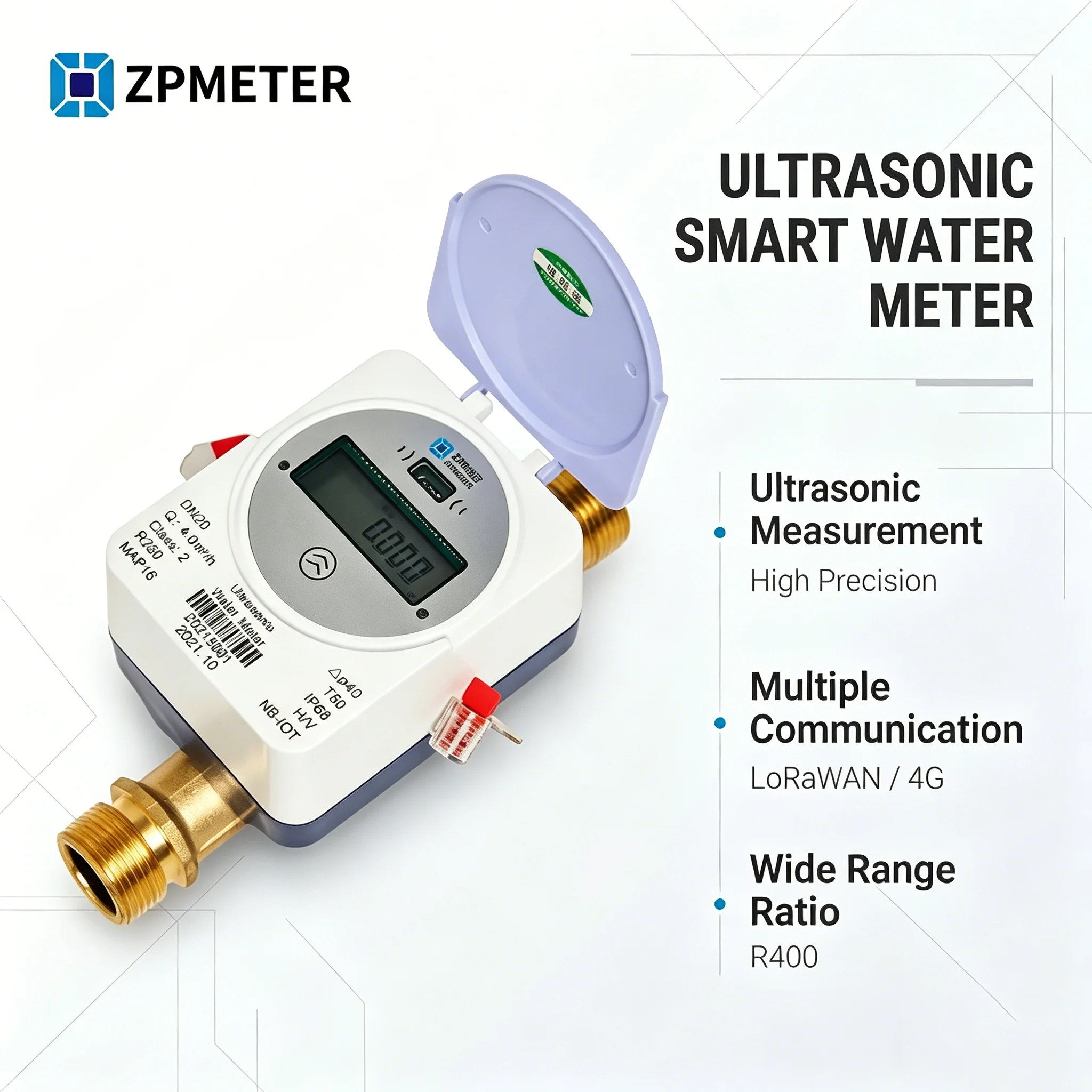
The performance of a BTU meter ultimately depends on the quality of its components and the expertise of its manufacturer. A meter with matched components, robust housing, and proper factory calibration will deliver reliable service for years, while a poorly constructed unit will generate data that cannot be trusted. ZPMETER, with over seventeen years of experience in ultrasonic metering, manufactures BTU meters that meet the precision requirements of commercial chiller applications . Their ultrasonic heat meters incorporate features that matter for long-term operation—low pressure drop design that reduces pump energy consumption, IP68-rated housings for harsh mechanical room environments, and communication modules that integrate seamlessly with Modbus and M-Bus networks. By combining in-house R&D with full production capabilities, ZPMETER ensures consistent quality across every unit, making them a reliable partner for building owners and HVAC engineers who need metering solutions they can depend on.
Table of Contents
- A Cautionary Tale from the Mechanical Room
- The Fundamentals of Measuring Thermal Energy
- Real-World Sizing Challenges
- Choosing the Right Technology for the Application
- The Critical Role of Temperature Sensors
- Integration with Building Management Systems
- Standards Compliance and Long-Term Reliability
- The Value of Experienced Manufacturing Partnerships