
 EN
EN
The Rural Deployment Reality
A few years back, a water utility in a hilly rural region asked for help with a problem. Their meters were scattered across farms and small towns separated by ridges and valleys. They had tried cellular-based solutions, but coverage was spotty at best. In one valley, the signal was so weak that meters would go offline for days at a time. The utility was facing the prospect of returning to manual readings—a costly step backward. Then they tested a LoRaWAN solution. With a single gateway placed on a water tower at the highest point in the county, they began receiving signals from meters over 10 kilometers away. Meters that had been silent for months started reporting again. This is the reality of what LoRaWAN can do for long-range water metering.
Understanding the Range Advantage
LoRaWAN's long-range capability comes from its use of sub-gigahertz radio frequencies. These frequencies travel further and penetrate obstacles like walls, trees, and buildings more effectively than the higher frequencies used by cellular networks or Wi-Fi . In open rural areas, a single LoRaWAN gateway can cover a radius of 15 kilometers or more. In dense urban environments with many obstructions, the range is typically 2 to 5 kilometers, still far exceeding what most other wireless technologies can achieve. This range advantage is not just about distance, though; it is about coverage reliability. A meter that is at the edge of a network's range but still connects reliably is more valuable than a meter closer to a gateway that frequently drops its connection due to interference.
What the Range Means for Network Design
The range of an individual meter directly affects the economics and complexity of network deployment. A utility covering a 100-square-kilometer area with cellular-based meters might need dozens of repeaters or additional infrastructure to fill dead zones. With LoRaWAN, the same area might require only a handful of well-placed gateways. In Nuremberg, Germany, a city of over half a million residents, a single LoRaWAN network was built using only 30 gateways . The savings in hardware, installation, and ongoing maintenance costs are substantial. For large-scale deployments, this efficiency is what makes the business case work. The network architecture also offers flexibility: utilities can deploy private networks for total control, or they can leverage public LoRaWAN networks offered by third-party providers, reducing their capital expenditure .
The Yorkshire Water Experience
One of the most instructive examples comes from the United Kingdom, where Yorkshire Water has committed to one of the largest smart water metering projects in Europe. Over a five-year period, the utility is installing 1.3 million LoRaWAN-connected water meters . The scale of this project is staggering, and it would not be possible without a technology that can cover a large and geographically diverse region. The early results demonstrate the value of the long-range tracking capability: the initial phase of the project identified over 1,000 customer-side leaks, saving 1.22 megaliters of water per day . These leaks would have gone undetected for months or years under a manual reading system. The network architecture combines high tower sites for broad coverage with mid-layer gateways and indoor solutions to ensure that every meter, no matter how buried, can transmit its data reliably . For the engineers managing this project, the long-range capability was not a convenience; it was a requirement.
How Adaptive Data Rate Enhances Reliability
Range is not a fixed property; it changes with environmental conditions. Rain, foliage, and even the position of a meter relative to a gateway can affect signal quality. LoRaWAN addresses this with an Adaptive Data Rate (ADR) mechanism. When signal quality is good, the meter can use a higher data rate, transmitting more frequently and in shorter time slots. When the signal weakens, the meter automatically switches to a lower data rate, which is more robust and travels further, ensuring that data still gets through . This dynamic adjustment means that a meter can maintain a reliable connection even as conditions change, without requiring manual intervention. The network server sends messages to meters that use ADR for data rate optimization, and the meters themselves can also enable ADR to adjust their transmission parameters based on received signal strength . This is the intelligence that makes long-range tracking work in the real world, not just on paper.
Power and Range Working Together
Long range is valuable only if the meter can sustain it over time. A meter that transmits over long distances must use enough power to reach the gateway, but using too much power would drain the battery quickly. LoRaWAN balances this by using a spread spectrum modulation technique that allows reliable communication at very low power levels . The result is a meter that can transmit over several kilometers while consuming minimal energy. Field-deployed meters regularly achieve battery lives of 10 to 15 years . This combination of long range and long battery life is the foundation of the business case for remote metering. A utility can deploy a meter in a remote location and be confident that it will transmit data reliably for a decade, without the cost and labor of frequent site visits.
The Meter Itself Matters
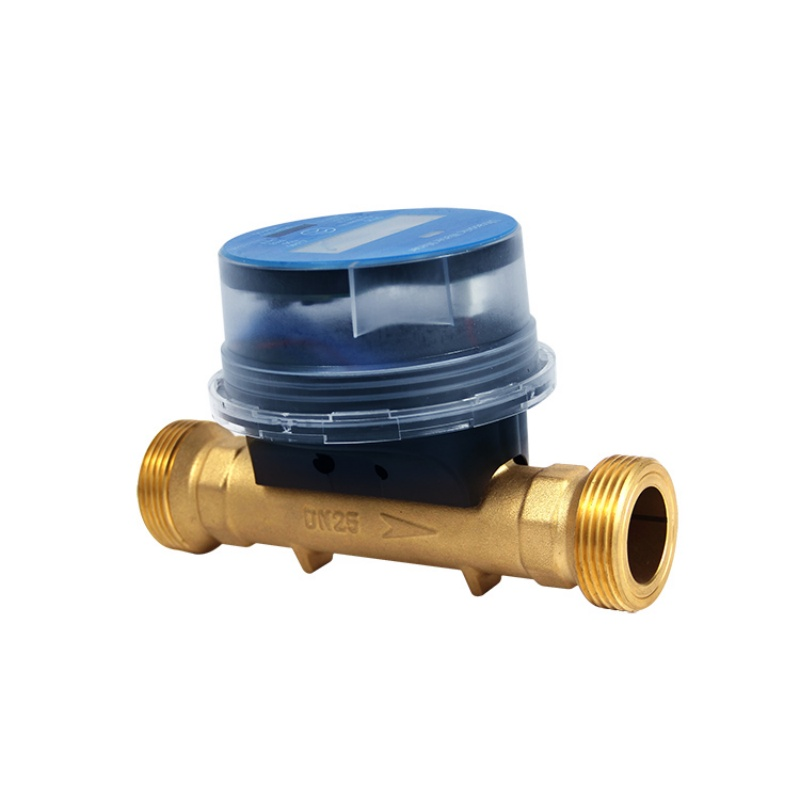
The range and reliability of a LoRaWAN water meter depend not just on the network, but on the hardware inside the meter. The antenna design, the quality of the radio components, and the overall build of the meter affect how well it can transmit and receive signals. ZPMETER, with over seventeen years of experience in ultrasonic metering, understands these requirements. Their LoRaWAN-enabled meters are built with IP68-rated housings that protect the electronics from water and dust, with antenna designs that maximize signal transmission from challenging locations like underground pits . The meters also offer flexible communication options, including M-Bus and pulse outputs for integration with existing systems . For utilities and system integrators, choosing a meter from a manufacturer with proven experience in both metering and wireless communication ensures that the long-range capability of the LoRaWAN network is fully realized. When the hardware and the network work together seamlessly, the result is a tracking system that is both reliable and cost-effective.