
 EN
EN
The Hidden Drain on City Resources
Standing next to a pumping station, watching water flow through pipes that were laid down before the internet existed, it is easy to see why city managers lose sleep over water loss. A significant portion of treated water never gets billed. It escapes through cracks that have grown over decades, drips from faulty household fixtures, or gets drawn off through unauthorized connections. In some cities, this unbilled water can reach a third of the total supply. The problem is not just environmental, it is financial. Every gallon lost is a gallon that has already cost money to treat and pump. Monthly manual readings provide a snapshot so outdated that by the time a leak is noticed, a substantial volume of water has already been wasted. This is precisely the problem that real-time monitoring with LoRaWAN is designed to solve.
Why LoRaWAN Fits the Urban Environment
Walking into a basement utility room in an older building, one immediately understands the connectivity challenge. Meters are tucked into dark corners, surrounded by concrete, steel, and earth. A meter often sits meters below ground level. In these conditions, a cellular signal is unusable, and WiFi is unthinkable. LoRaWAN offers a different approach. Its sub-gigahertz frequencies travel effectively through dense materials, reaching meters even in these challenging locations without requiring a clear line of sight to a tower or gateway . One engineer involved in a European deployment recalled how they achieved reliable coverage in a historic city center where centuries-old stone walls had defeated previous wireless solutions. The network simply worked where others could not. This ability to penetrate difficult urban terrain has made LoRaWAN the technology of choice for cities looking to modernize their water infrastructure without rebuilding the buildings that sit on top of it.
The Data That Changes Decision Making
The value of a smart water network is ultimately about the data it provides. A LoRaWAN-connected meter can report consumption as frequently as every fifteen minutes. This continuous stream of information reveals consumption patterns that monthly readings hide completely. A utility manager in a Spanish city described finding a household that consistently used ten times more water than their neighbors during the night, leading to the discovery of a silent toilet leak that had been running for months. Another city identified an entire neighborhood where consumption spiked during specific hours, tracing the pattern to a group of commercial users who were drawing water illegally. These stories repeat themselves across every deployment. The data makes visible what was previously invisible, empowering utilities to act quickly and fairly.
From Pilot to City-Wide Success
Experience has shown that LoRaWAN water metering scales effectively from pilot projects to full city-wide deployments. One case study from Castellón in Spain is instructive. The project started with a carefully monitored pilot of 600 meters, validating the technology's performance and building operator confidence . After the pilot demonstrated reading success rates above 98%, the utility proceeded with a full rollout covering 30,000 meters across the entire city. The approach of pilot-then-scale is now standard practice among early-adopting utilities, as it allows teams to identify and resolve site-specific issues before making a larger commitment. Valencia took this model to a regional level, coordinating a deployment of nearly 150,000 LoRaWAN meters across 58 municipalities, achieving consistent reading success rates of 97-98% . These results are not laboratory figures. They are real-world performance numbers from actual city infrastructure projects.
The Business Case That Goes Beyond Billing
City leaders evaluating LoRaWAN water meter infrastructure are increasingly looking beyond the meter reading use case. The same network can serve multiple smart city applications. The gateways that collect water consumption data can also receive information from air quality sensors, public trash can monitors, or smart irrigation controllers . This reduces the overall cost per application and makes the initial investment more justifiable. In Nuremberg, a city of over half a million people, a single LoRaWAN network was built using only 30 gateways, an infrastructure base that can now support a wide range of municipal IoT use cases . Water metering is often the first application because its business case is clear, but it is rarely the last. Cities are discovering that the network they build for water is the foundation for a much broader digital transformation of municipal services.
Manufacturing Consistency at Scale
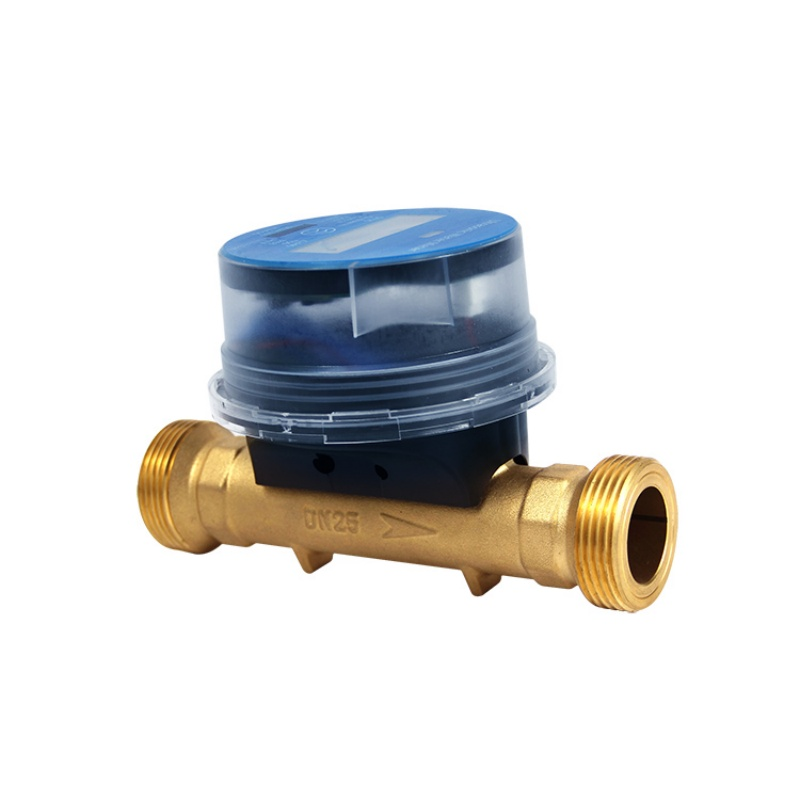
The success of these deployments ultimately depends on the availability of meters that are reliable, accurate, and consistent across thousands of units. A meter that fails early or loses accuracy undermines the entire system. This is where the manufacturing partner's capabilities become critical. ZPMETER, with over seventeen years of experience in ultrasonic metering, brings more than just production lines to the partnership. Their in-house research and development teams, proprietary tooling, and full OEM/ODM capabilities allow them to deliver meters that meet the exact specifications required by each utility's network . Their ultrasonic meters offer the precision needed for accurate billing and leak detection, while their IP68-rated housing ensures reliable operation in the wet, harsh environments where water meters live . For utilities and system integrators, partnering with a manufacturer who understands the entire product lifecycle, from initial design through production and long-term support, is essential to achieving the operational benefits that LoRaWAN promises. As the global market for smart water metering continues to grow, the availability of reliable manufacturing partners becomes a key factor in the success of these critical infrastructure projects.