
 EN
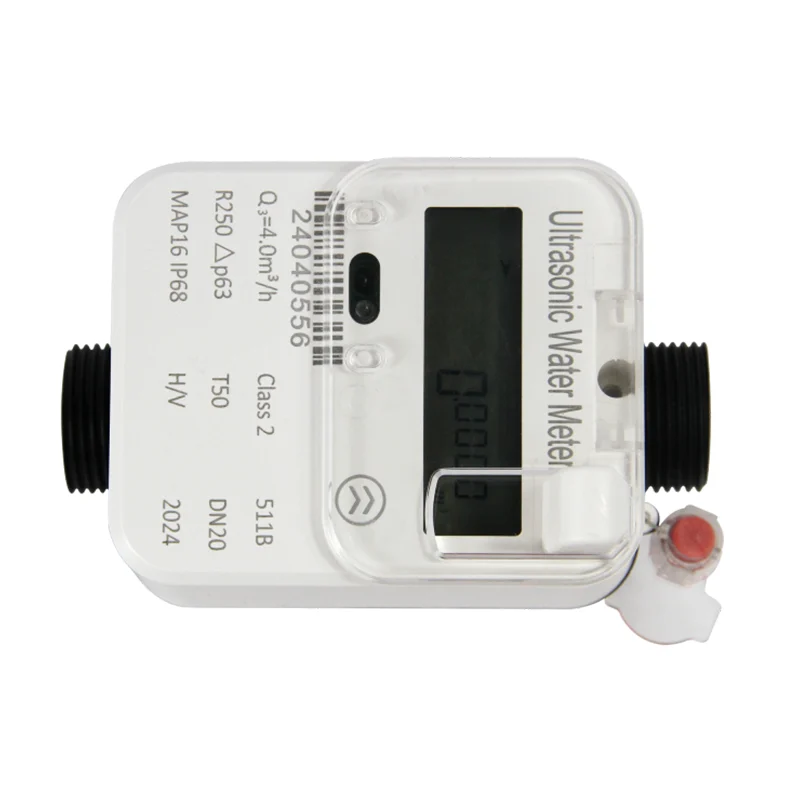
Understanding the Digital Meter Interface
Transitioning from analog spinning dials to solid-state digital displays represents a significant upgrade in residential water infrastructure. Legacy mechanical meters relied on physical sweep hands and mechanical odometers, which often drifted in accuracy due to mechanical wear and mineral buildup. Modern electronic water meters utilize high-resolution liquid crystal displays to deliver real-time volumetric measurements, directional flow vectors, and system health status. Managing residential properties or municipal connections requires a clear understanding of these digital interfaces to maintain precise consumption tracking and avoid unexpected utility expenses. Field experience across utility distribution networks demonstrates that regular digital reading empowers property owners to identify abnormal usage patterns long before they turn into costly structural repairs or high monthly bills.
Decoding Flow Metrics and Screen Indicators
A digital water meter consolidates multiple operational parameters into a single, intuitive screen loop. Activating the optical sensor or pressing the wake-up button cycles the display through several crucial data points designed for complete consumption transparency.
-
Cumulative Volume Register: The main display shows total water volume consumed since installation, measured in cubic meters ($\text{m}^3$), U.S. gallons, or liters. Whole units precede the decimal point, while trailing digits record fractional consumption for ultra-precise auditing.
-
Instantaneous Flow Speed: Toggling to the rate parameter reveals live water velocity moving through the flow tube (e.g., liters per minute). When all household outlets remain closed, this number should stabilize firmly at zero.
-
Directional Flow Arrow: A forward arrow indicates normal supply delivery into the building. Conversely, a reverse arrow alerts users to backflow conditions, which can indicate check-valve failure or severe system pressure swings.
-
Diagnostic and Connectivity Icons: Visual indicators display battery health warnings, low-signal alerts, and active wireless connection status across cellular, LoRaWAN, or M-Bus automated reading networks.
Detecting Hidden Leaks via Baseline Isolation
Undetected plumbing leaks in toilet flappers, underground service pipes, or irrigation valves cause severe water loss and inflate utility expenses. An electronic digital water meter acts as a continuous diagnostic monitor, tracking baseline fluid movement during periods when no water should be flowing.
-
Isolate Household Water Fixtures: Turn off all taps, showers, washing machines, ice makers, and automated irrigation controllers.
-
Monitor Live Flow Readout: Observe the instantaneous flow rate register on the meter face. Any active numerical value confirms fluid passage through the main service line.
-
Check for Warning Symbols: Advanced digital water meter designs feature integrated leak detection algorithms. A flashing faucet icon, dripping tap symbol, or warning triangle appears on the LCD screen when continuous low-level flow persists over a twenty-four-hour window.
-
Perform Valve Isolation Testing: Shut off the primary indoor isolation valve. If the meter flow rate drops immediately to zero, the leak is located within internal household plumbing lines; if flow continues, the leak exists underground between the meter box and the building foundation.
Technological Evolution from Mechanical to Ultrasonic Metering
Upgrading from physical rotating impellers to solid-state ultrasonic measurement represents a major leap in utility accuracy and long-term durability. According to international utility standards such as ISO 4064 and OIML R49, flow measurement instruments must maintain strict accuracy bands across extended service lifespans.
| Feature / Metric | Traditional Mechanical Water Meter | Modern Ultrasonic Digital Water Meter |
| Measurement Principle | Rotating impellers / nutating discs | Transit-time ultrasonic sound waves |
| Low-Flow Sensitivity | Poor (fails to register minor trickle leaks) | High (detects micro-flows down to 2–4 liters/hour) |
| Display Mechanics | Mechanical number wheels & rotating dials | High-contrast multi-function LCD screen |
| Moving Parts & Wear | High friction, prone to sand clogging | Solid-state, zero moving parts, IP68 rated |
| Data Integration | Manual manual reading required | Built-in Wireless IoT (LoRaWAN, M-Bus, RS485) |
Because an ultrasonic digital water meter contains no moving parts inside its flow tube, sound wave transit times remain accurate across years of operation without calibration drift, delivering dependable consumption tracking for both utilities and end users.
Diagnostic Alarms and Smart Meter Management
Modern digital meters perform continuous self-diagnostics to verify sensor health, battery voltage, and fluid conditions. Recognizing standard diagnostic codes accelerates field resolution and prevents unnecessary equipment replacements. For example, an empty pipe warning (often displayed as an E-01 error or empty tube symbol) indicates that the measuring chamber lacks fluid or contains trapped air pockets, which can be resolved by bleeding downstream discharge valves. A reverse flow alarm signals pressure imbalances or failing check valves, while high-flow alerts warn of line breaks or open bypass valves. For municipal utility projects, commercial facilities, and residential developments seeking dependable flow measurement, choosing engineered hardware is vital. ZPMETER manufactures advanced digital water meters, smart heat meters, and motorized control valves engineered to rigorous international standards. Featuring IP68 waterproof enclosures, wide dynamic range ratios up to R400, and flexible IoT connectivity, ZPMETER provides robust manufacturing quality and global supply chain support to ensure accurate, maintenance-free water management across global networks.