
 EN
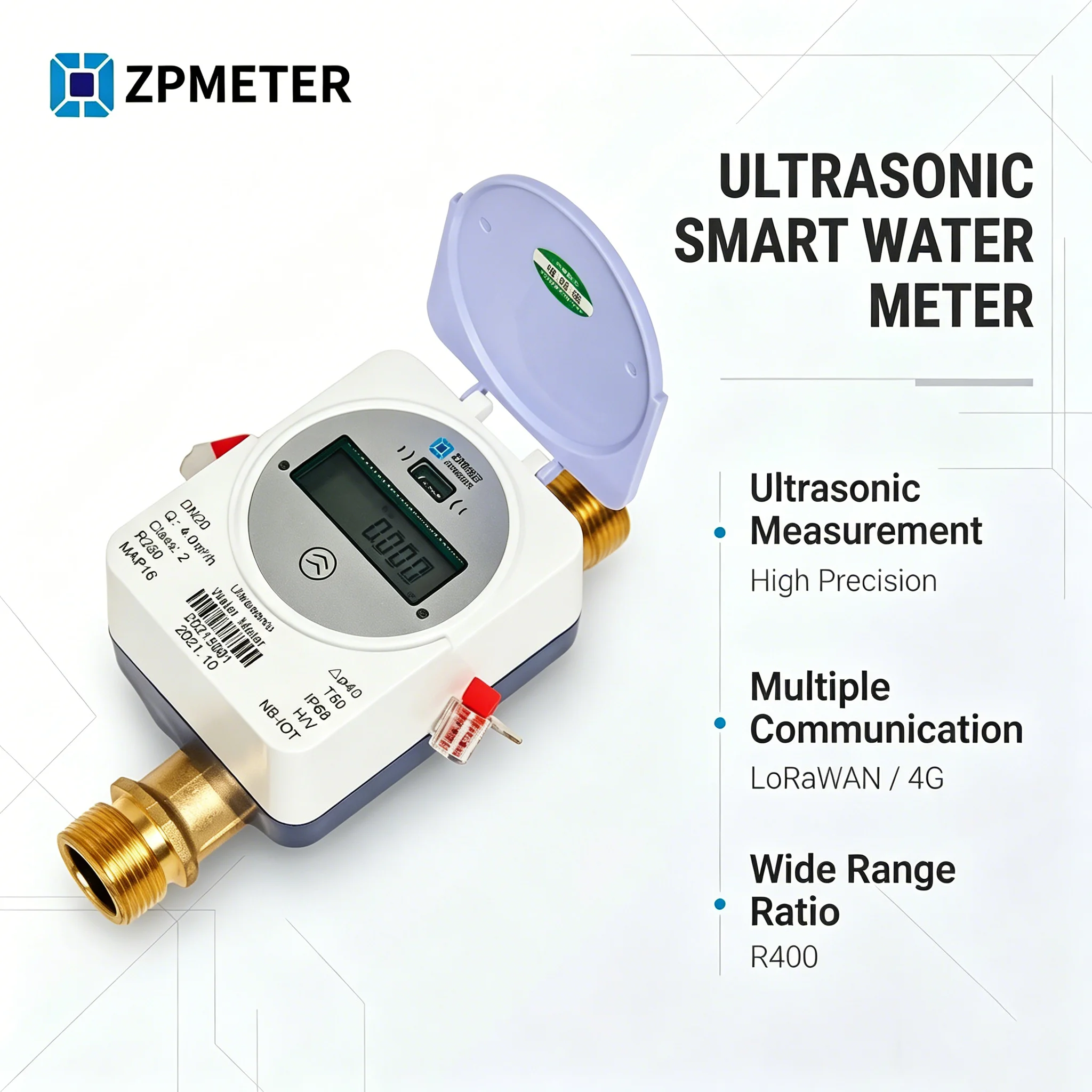
Solid-State Electronic Measurement and High Precision
Traditional mechanical meters rely heavily on moving components like impellers and gears to measure flow, which makes them susceptible to mechanical wear, clogging, and loss of accuracy over time. In contrast, modern flow measurement technology relies on solid-state architectures—most notably transit-time ultrasonic measurement technology. By sending high-frequency acoustic signals through the fluid stream, a high-performance digital water meter captures precise velocity data down to extremely low flow rates. This static construction eliminates physical wear entirely, providing a wide turndown ratio (such as dynamic range ratios up to R400) and maintaining consistent Class 2 accuracy throughout its operational lifespan. For municipal utilities and residential property managers, replacing mechanical units with a modern digital water meter ensures reliable billing equity and prevents revenue losses caused by unrecorded low-flow leakage.
Multi-Protocol IoT Connectivity and Remote Data Transmission
A defining characteristic of the contemporary digital water meter is its ability to transmit consumption data automatically across long distances without manual meter readings. Equipped with integrated wireless communication modules—such as LoRaWAN, NB-IoT, M-Bus, RS485, or pulse outputs—a connected digital water meter seamlessly feeds real-time telemetry directly into Advanced Metering Infrastructure (AMI) and Automatic Meter Reading (AMR) networks. Utilities can continuously collect operational metrics, monitor network health, and perform automated hourly or daily billing cycles. This remote capability eliminates the operational overhead of physical field inspections, reduces human data entry errors, and provides continuous visibility into end-user consumption patterns across distributed urban networks.
Advanced Diagnostic Alarms and On-Board Data Logging
Beyond standard volume tracking, an intelligent digital water meter functions as a localized monitoring sensor across the distribution grid. Integrated microprocessors continuously analyze signal integrity, temperature variations, and reverse flow patterns to detect network anomalies instantly. If continuous low-velocity flow indicates a plumbing leak, or if backflow, pipe freezing, or magnetic tampering occurs, the digital water meter generates immediate diagnostic alarms displayed on its LCD screen and transmitted via IoT channels. Furthermore, non-volatile internal memory storage allows the digital water meter to log monthly, daily, and hourly usage histories for 24 months or more. This archived data provides traceable historical evidence for resolving billing disputes and performing detailed non-revenue water (NRW) audits.
Robust Environmental Protection and Low-Power Engineering
Water infrastructure equipment must operate continuously under harsh conditions, including submersion, outdoor humidity, extreme temperature swings, and direct UV exposure. To ensure long-term field stability, an industrial-grade digital water meter is built with IP68-rated hermetically sealed enclosures, corrosion-resistant brass or engineered alloy bodies, and toughened glass display windows. Because utility deployments often lack external power access, a commercial digital water meter is powered by high-capacity, low-self-discharge lithium batteries coupled with ultra-low-power electronic circuitry. This design allows a battery-operated digital water meter to function maintenance-free in subterranean meter boxes or outdoor installations for up to 10 to 15 years, significantly lowering life-cycle maintenance costs.
Integrated Remote Valve Control and Smart Grid Integration
In modern utility management and commercial sub-metering systems, water monitoring must be paired with operational control. Advanced models incorporate an integrated motorized valve directly into the flow body, turning a passive digital water meter into a fully responsive control node. Utility operators can execute remote valve shut-offs or flow throttling via central management software in response to unpaid accounts, pipe bursts, or emergency utility cut-offs. Additionally, prepaid water management modes enable end-users to purchase credits beforehand, allowing the digital water meter to automatically manage allowance allocations and close the valve when credit balance reaches zero. Combining real-time flow sensing with automated valve control enables water authorities to build intelligent, resilient, and highly sustainable smart water grids.