
 EN
EN
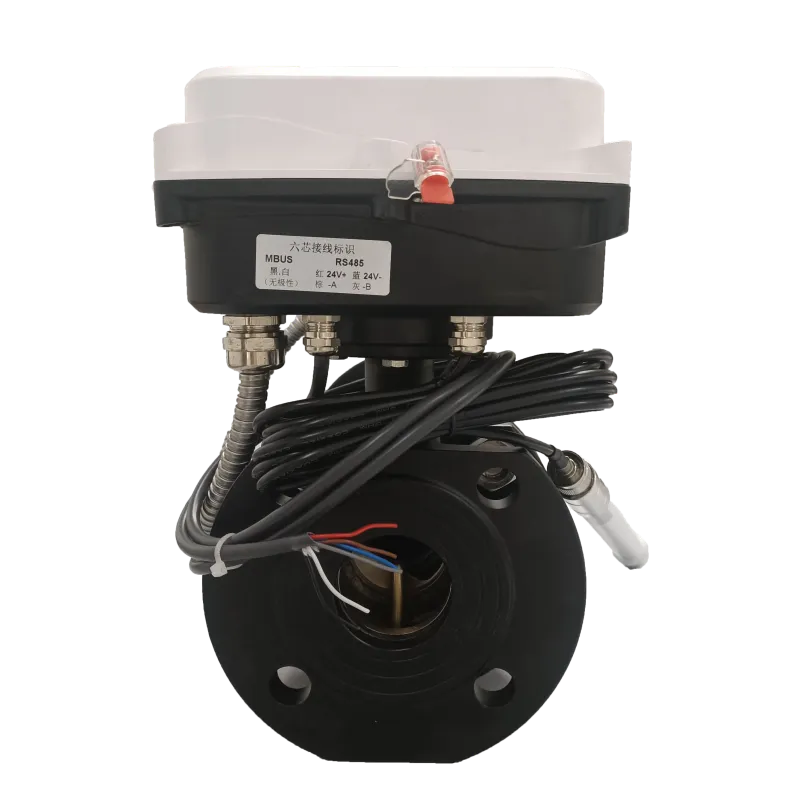
Flow Meter Troubleshooting Guide: Ultrasonic & Digital Meters
Diagnosing erratic metrics or sudden signal loss on an industrial pipeline network always demands an immediate, methodical approach. Back in early commissioning days on custody-transfer lines within heavy industrial facilities, a bouncing digital readout could easily throw off an entire operational shift. The first step in any robust diagnostic routine involves confirming basic electrical parameters and inspecting the power delivery units. Technicians must verify that internal circuit boards receive a stable voltage, checking whether terminal screws or external power lines have loosened due to prolonged environmental vibration. A blank screen or intermittent data transmission frequently points to a tripped fuse or a severed power harness rather than a core sensor failure. Ensuring secure, low-impedance grounding also prevents erratic voltage fluctuations from skewing sensitive electronics, keeping baseline readings clean and dependable.
Ultrasonic measurement instruments rely heavily on uninterrupted acoustic wave propagation between transducers, meaning physical anomalies in the media will quickly disrupt performance. Low signal strength or total transmission failure usually stems from acoustic decoupling, incorrect sensor alignment, or severe scaling inside the inner pipe wall. Operators must examine the mounting interface to ensure proper contact pressure and reapply acoustic coupling compound if necessary. Furthermore, if air bubbles, vapor pockets, or suspended particulate matter become trapped within the liquid medium, sound waves scatter unpredictably across the conduit. Bleeding the pipeline and verifying that the fluid stream remains completely full will restore accurate transit-time metrics, a lesson learned the hard way after chasing phantom flow drops on a high-pressure cooling loop.
Modern smart metering hardware features sophisticated onboard diagnostic software capable of outputting specific error codes during operational anomalies. When a warning light illuminates or a communication failure occurs, plant engineers should reference the device diagnostic ledger to isolate the fault category quickly. Common triggers include high-frequency electrical noise from nearby variable frequency drives, parameter misconfigurations regarding pipe wall thickness, or firmware communication dropouts. Shielded data cabling and isolated communication pathways effectively eliminate electromagnetic interference, re-establishing seamless data flow between the field unit and the central control architecture. According to instrumentation standards published by the International Society of Automation, maintaining strict signal isolation is critical for preventing packet loss in noisy industrial environments.
External physical conditions heavily dictate long-term measurement accuracy and overall instrument reliability across changing seasons. Inappropriate placement—such as positioning sensors too close to upstream elbows, regulating valves, or turbulent pumps—distorts the fluid velocity profile before it ever reaches the acoustic path. Most precision units require specific lengths of unobstructed straight pipe upstream and downstream to maintain true laminar flow. Additionally, extreme thermal expansion, continuous mechanical pipe stress, or aggressive chemical exposure can warp the meter body or degrade internal gaskets, resulting in operational drift and minor leaks that compromise plant safety.
Implementing a structured preventive maintenance schedule minimizes unexpected downtime and extends the operational lifespan of both ultrasonic and digital flow systems. Regular diagnostic audits should include zero-flow offset verifications, scaling parameter re-evaluations, and firmware integrity checks to catch minor deviations early. Technicians must periodically inspect wetted components for residue buildup or biological fouling that might insulate the sensors. By combining proactive field inspections with robust data logging analysis, facility managers ensure uninterrupted operational efficiency and precise resource measurement. Delivering these high-precision instruments to demanding global markets requires rigorous manufacturing control, precision machining, and robust supply chain networks—capabilities that Hebei Minmetals consistently provides to support heavy industries worldwide.