
 EN
EN
When the Meter Is Out of Reach
There is a moment in every smart city project when the team realizes the hardest part isn't the meter—it's getting the data out. In one European city with a historic center, the planners faced a frustrating problem. The water meters were installed in basements beneath centuries-old buildings with stone walls three feet thick. Cellular signals simply did not reach. Wi-Fi was out of the question. The project was stalling until someone suggested testing LoRaWAN. With a single gateway placed on a municipal building, the network came alive. Meters that had been dark for weeks started reporting consumption data within hours. This is the reality of IoT water metering: the best meter in the world is useless if its data can't get out.
The Network Architecture That Works
LoRaWAN is a network protocol designed from the ground up for low-power, wide-area IoT applications. It uses sub-gigahertz radio frequencies that travel through walls, underground, and over long distances. A single gateway can cover an entire neighborhood or industrial park . This is not a theoretical advantage; it is a practical one. In Nuremberg, Germany, a city of over half a million residents, the entire LoRaWAN network was built with just 30 gateways . For a utility, this means fewer hardware purchases, simpler installation, and easier maintenance. The network also supports bidirectional communication, allowing remote commands such as valve control or over-the-air firmware updates. These capabilities transform a simple meter into an active network endpoint that can be managed and updated remotely.
Security That Meets Modern Standards
Water consumption data is sensitive. It reveals occupancy patterns, business hours, and even lifestyle habits. A leak at a manufacturing facility could expose a competitor's production schedule. This is why security is not an afterthought for LoRaWAN. The protocol mandates AES-128-bit end-to-end encryption over two independent security layers, ensuring that data is protected from the meter to the network server . The keys used for encryption are unique to each device and session, meaning a compromised meter does not expose the entire network. For utilities that must comply with data protection regulations, the robust security framework built into LoRaWAN simplifies compliance and reduces legal risk.
What the Data Shows at Scale
The business case for LoRaWAN water meters is not based on laboratory tests. It is based on real-world performance. In Spain, a coordinated deployment of nearly 150,000 LoRaWAN meters across 58 municipalities consistently achieves reading success rates of 97-98% . This is not a pilot; this is production scale. In the United Kingdom, Yorkshire Water is in the process of installing 1.3 million LoRaWAN-connected water meters, one of the largest smart metering projects in the country . The early results have already identified over 1,000 customer-side leaks and saved 1.22 megaliters of water daily in the initial phase . These numbers show that LoRaWAN is not a niche technology. It is a mainstream connectivity choice for utilities that need to operate at scale.
The Power Strategy That Matters
A smart meter that needs a new battery every year is not smart. It is a maintenance burden. LoRaWAN meters are designed to avoid that problem. The combination of efficient modulation and the protocol's low duty cycle means a meter can operate on a single battery for up to 15 years . This is not just a specification; it is a business driver. A utility can deploy a meter in a remote location and be confident it will transmit data reliably for a decade without a site visit for battery replacement. Some advanced meters also feature maintenance-free construction with no moving parts, further reducing the total cost of ownership. The long battery life is what makes the economics of remote metering work.
What Satellite Connectivity Means for the Future
The range of LoRaWAN is impressive, but it has limits in truly remote or mountainous areas where no terrestrial gateway exists. The industry is solving this through satellite connectivity. A landmark demonstration at ACE 2025 showcased the first direct-to-satellite LoRaWAN water meter, a solution that allows meters to communicate directly with satellites without relying on cellular towers or local gateways . This advancement extends the reach of LoRaWAN water meters to anywhere on the planet, fundamentally transforming data collection for utilities with assets in infrastructure-scarce regions. For many utilities, the ability to maintain connectivity across an entire service territory without building out additional ground infrastructure makes the choice to adopt LoRaWAN even more compelling.
The Hardware That Makes It Work
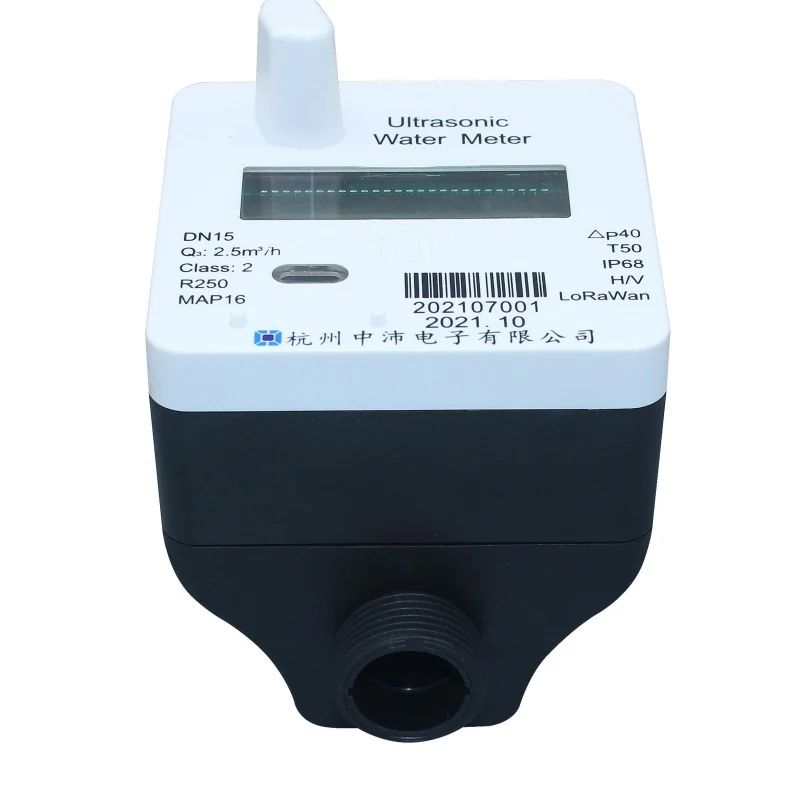
The performance of a LoRaWAN water meter depends on the quality of its ultrasonic sensing, its communication module integration, and its physical construction. ZPMETER, with over 17 years of experience in ultrasonic metering and in-house R&D, brings this expertise to their LoRaWAN-enabled water meters. Their meters incorporate features that matter for long-term operation: IP68-rated housings for harsh environments, communication modules that integrate with LoRaWAN, M-Bus, and pulse networks, and low-pressure drop designs that reduce system energy consumption. For system integrators and utilities, choosing a manufacturer with a proven track record in both metering and IoT connectivity ensures that the hardware and the network work together to deliver the operational benefits that LoRaWAN promises.