
 EN
EN
The Wake-Up Call from a City’s Water Loss
A few years ago, a mid-sized city was losing nearly a quarter of its treated water to leaks and unmetered usage, a silent drain on its budget and a growing source of resident complaints. The utility knew the old mechanical meters were part of the problem, but they didn't know how much water was being lost or where. The decision to deploy a smart water metering system was driven by necessity, not innovation. Within six months of installation, the utility had identified the leaks that had been hidden for years, reduced non-revenue water by 18%, and regained the trust of its residents. This is the story of how smart systems are transforming water management from a guessing game into a data-driven science.
The Hidden Cost of Mechanical Inaccuracy
The humble mechanical water meter, with its spinning turbine and clicking gears, has been the standard for over a century. It works, but it works less well as it ages. Sediment builds up, bearings wear, and the meter begins to slow down, under-registering consumption by 5% to 10% or more. This isn't just a minor accounting error. When thousands of meters under-register across a city, the utility loses significant revenue without delivering less water. The cost is passed on to other ratepayers or absorbed by the utility's budget. Smart meters, based on ultrasonic technology, have no moving parts. They measure flow by sending sound waves through the water and measuring the time difference, a method that remains accurate over the entire lifespan of the meter . Utilities that switch to smart systems often discover that their actual water production and distribution are higher than they realized, simply because the old meters were never reading accurately.
The Behavioral Nudge That Works
The shift from a monthly bill to real-time data transforms the relationship between the utility and the consumer. In Auckland, New Zealand, the utility deployed smart meters with a mobile app that gave residents half-hourly consumption data and leak alerts . The results were striking. High-water users, once informed of their usage patterns, reduced their consumption significantly. The feedback loop worked because it was timely, specific, and actionable. A resident could see exactly how their morning shower or garden watering affected their daily total. This is not about imposing restrictions; it is about providing transparency. Data from the UK Parliament supports this approach, showing a potential 17% reduction in household consumption when moving from unmetered to smart metered billing . Smart systems are not just tools for utilities; they are tools for consumers to take control of their own usage.
The IoT Architecture That Enables It
A smart water meter system is built on a modern Internet of Things architecture that brings together hardware, connectivity, and data analytics. The ultrasonic sensors inside the meter provide the raw data—flow rate and total volume. This data is then sent via communication modules using protocols like LoRaWAN, NB-IoT, or M-Bus to a central cloud-based platform . The platform applies algorithms to analyze consumption patterns, detect leaks by identifying continuous flow, and generate alerts. This architecture is scalable, secure, and increasingly cost-effective, with hardware costs dropping as the technology matures. A utility can start with a small pilot and expand to cover the entire service area without significant changes to the network infrastructure.
Beyond Reading: The Leak Detection Capability
The most immediate financial return from a smart water system often comes from leak detection. A continuous, low-flow reading at 2 AM is almost always a leaking toilet. A pattern of rising flow in a commercial district on weekends when businesses are closed suggests a pipe break. Smart systems identify these patterns automatically . In one European deployment, the utility found that over 1,000 customer-side leaks were identified in the initial phase of smart meter rollout, saving 1.22 megaliters of water daily . For utilities, the ability to detect and respond to leaks rapidly reduces the volume of water lost and the cost of repairs. For consumers, it prevents the surprise of a high bill caused by a leak they didn't know existed. The system also supports remote valve control, allowing the utility to shut off a leaking line immediately, preventing damage and waste.
The Long-Term Investment in Reliable Hardware
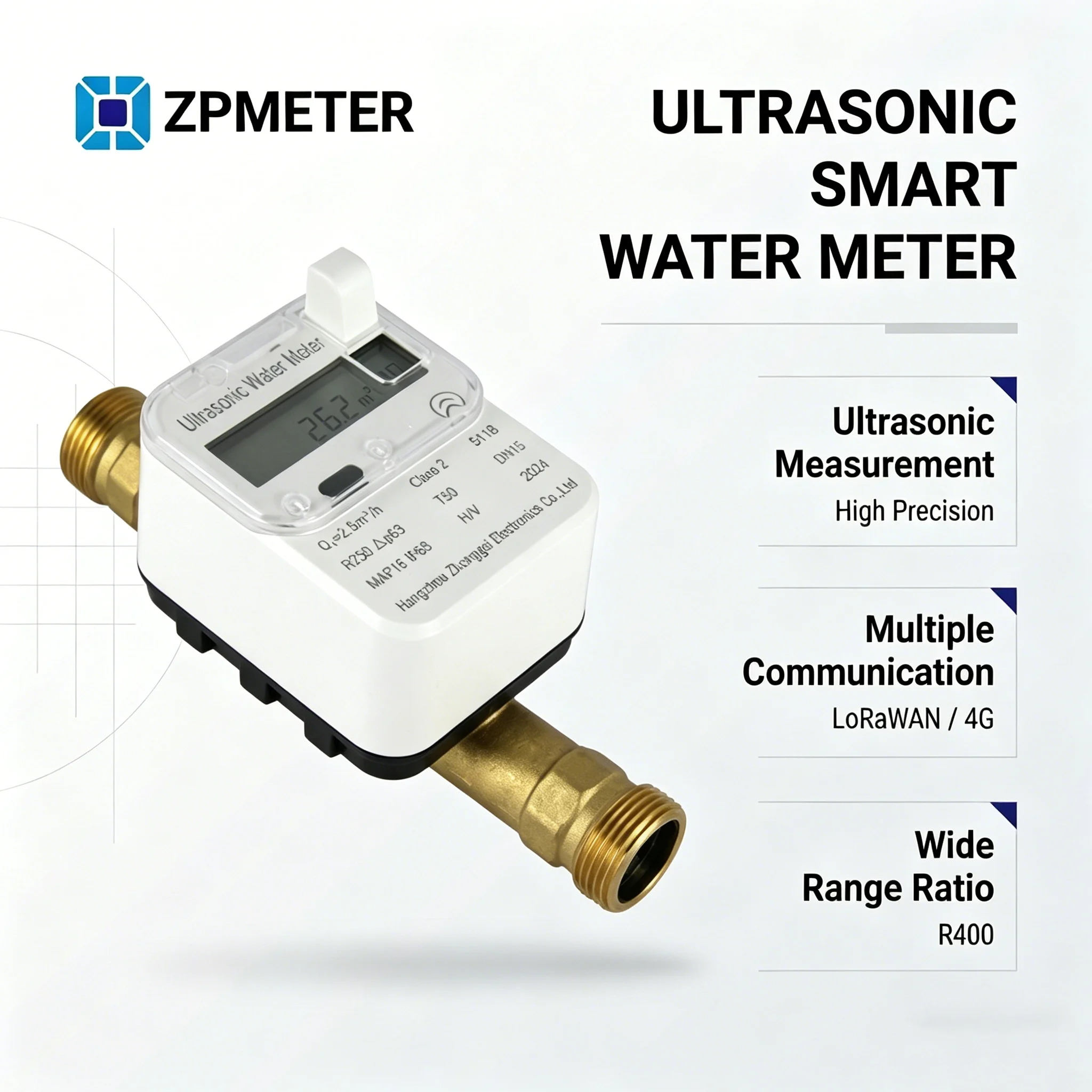
The success of a smart water system depends on the quality of the meters at its core. A meter that fails, loses accuracy, or cannot communicate effectively undermines the entire investment. This is where the expertise of an experienced manufacturer comes into play. ZPMETER, with over seventeen years of experience in ultrasonic metering, designs and produces smart water meters that address these challenges. Their meters feature IP68-rated housings that withstand submersion and harsh environments, ultrasonic sensors that deliver consistent accuracy without mechanical wear, and integrated communication modules that support LoRaWAN, M-Bus, and pulse protocols for flexible integration . By maintaining in-house R&D and full production lines, ZPMETER ensures quality control at every stage, from component selection to final assembly. For utilities and system integrators, partnering with a manufacturer that can deliver reliable hardware at scale is as important as choosing the right software platform.