
 EN
EN
Understanding Commercial Water Metering Challenges
Commercial building managers and facility operators face a recurring problem when selecting water metering equipment: balancing measurement accuracy against operational complexity. Unlike residential applications where flow rates remain relatively stable, commercial facilities experience wide variations in water consumption throughout the day. Restaurants see peak usage during meal preparation hours, office buildings experience surges during morning arrivals, and industrial facilities operate on completely different cycles. This variability demands a water flow meter capable of maintaining accuracy across both high-flow and low-flow conditions. Additionally, commercial properties often span multiple floors or buildings, making manual meter reading inefficient and prone to delays. The cumulative effect of these challenges leads to inaccurate billing, unnoticed leaks, and difficulty in identifying consumption patterns that could drive conservation efforts.
Key Specifications That Matter for Commercial Buildings
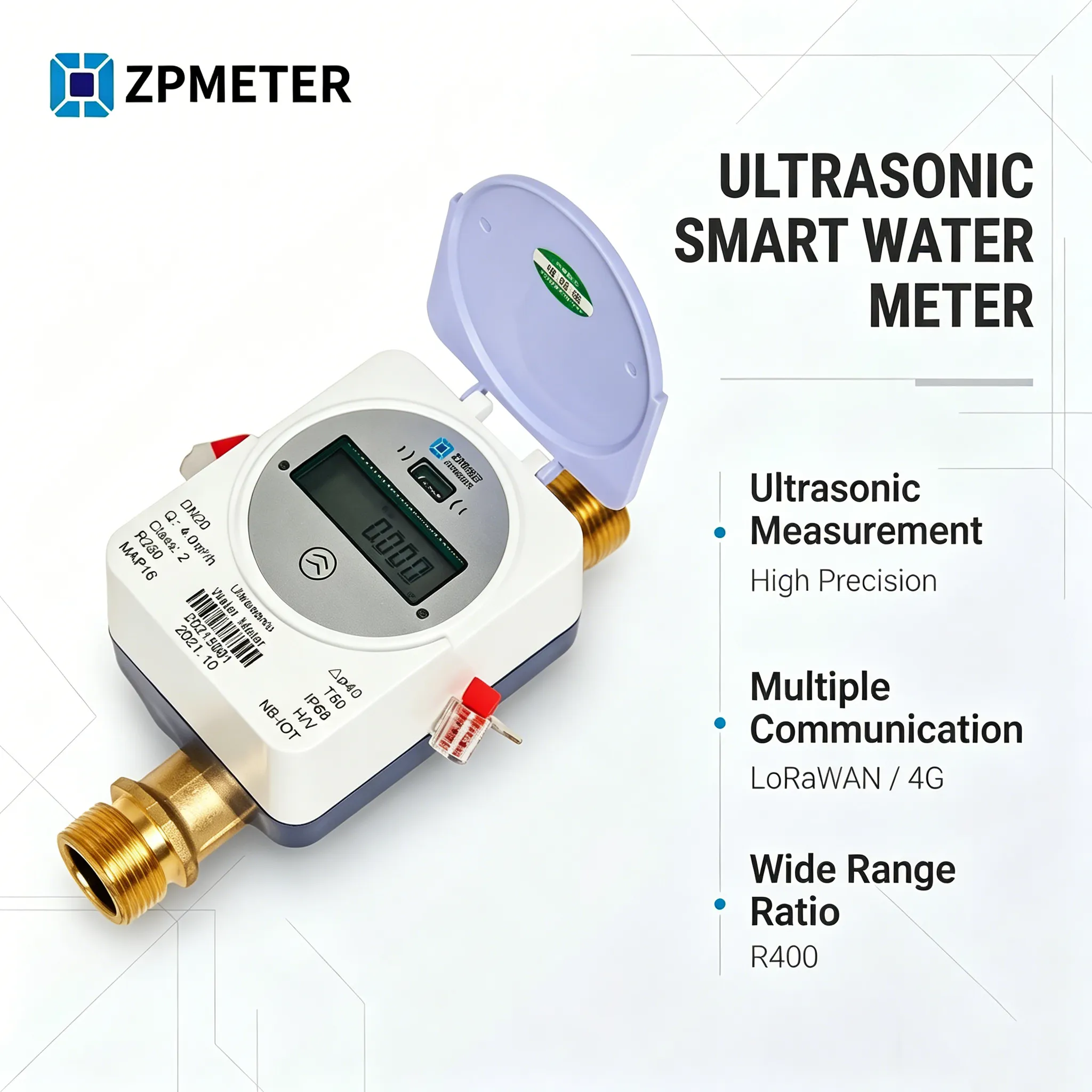
When evaluating water flow meters for commercial environments, several technical specifications directly impact long-term performance. The range ratio, commonly expressed as R-value, indicates how well a meter measures across different flow rates. A meter with an R400 range ratio, for example, can accurately measure flows from the nominal rate down to one four-hundredth of that rate, making it suitable for buildings with highly variable demand. Accuracy class is another critical factor; Class 2 meters comply with ISO 4064 and GB/T 778 standards and provide sufficient precision for most commercial billing applications. Temperature ratings such as T30, T50, or T70 define the operating temperature range, with higher T-ratings enabling broader application in both cold and hot water systems. Ingress protection ratings like IP68 ensure the meter remains functional even in flooded valve pits or underground installations where moisture exposure is inevitable. For commercial sites with multiple entry points, selecting meters across DN15, DN20, and DN25 sizes allows proper matching to pipe diameter and expected flow volume.
Comparing Water Flow Meter Technologies
Mechanical water meters have served the industry for decades, relying on impellers or turbine mechanisms to measure flow. While initially inexpensive, these devices experience wear over time, particularly in commercial settings with high-volume usage, leading to declining accuracy and eventual replacement. Electromagnetic meters offer better accuracy and no moving parts, but they require continuous power supply and carry higher upfront costs that may not suit every budget. Ultrasonic water meters represent a different approach, using sound waves to measure flow velocity without any moving parts in the water stream. This technology eliminates mechanical wear, maintains stable accuracy over time, and handles both forward and reverse flow measurement. For commercial buildings where uninterrupted operation and predictable maintenance schedules matter, the absence of wear-prone components translates to fewer service calls and more reliable billing data. The ability to detect drip flows and pipe bursts through software algorithms adds another layer of protection for facility managers responsible for preventing water damage and controlling utility costs.
Communication and Remote Monitoring Capabilities
Modern commercial water management extends far beyond monthly manual readings. A water flow meter installed today should integrate with existing building management systems or utility networks through standardized communication protocols. MBUS and RS485 wired connections remain common in new construction where cabling infrastructure is accessible. For retrofit applications or geographically dispersed properties, wireless options including LoRaWAN, NB-IoT, Zigbee, 4G cellular, and wMBUS provide flexibility based on local network availability and infrastructure constraints. Pulse output offers compatibility with legacy data acquisition systems. The breadth of interface options matters because commercial portfolios rarely use a single communication standard across all properties. Battery life is another operational consideration; a meter with a battery lifespan of six years or more reduces maintenance visits and associated labor costs. Remote valve control capabilities, available on certain integrated models, enable utilities or building operators to shut off water supply automatically during emergencies or for non-payment scenarios without dispatching personnel to the site.
Lessons from Large-Scale Commercial Deployments
Theoretical specifications gain context through actual field performance. Between 2023 and 2024, a residential and commercial water utility in East Africa deployed 20,000 valve control ultrasonic water meters across a mixed-use development area. The project required meters capable of operating in ambient temperatures up to 50 degrees Celsius, communicating over NB-IoT networks with intermittent coverage, and supporting remote valve operation for billing enforcement and leak isolation. After 18 months of operation, the utility reported that automatic valve cleaning cycles prevented the sediment buildup issues that had previously affected mechanical meters in the region. NTC temperature sensors integrated into the meters enabled the utility to monitor supply temperature and detect cross-connection events. This deployment illustrates how integrated features, remote communication, and environmental resilience combine to address real operational challenges in commercial water distribution networks.
How to Choose the Right Water Flow Meter
Selecting the appropriate water flow meter for a commercial facility requires aligning technical capabilities with operational requirements. Start by documenting the minimum and maximum flow rates expected during normal operations, then select a meter with a range ratio that covers this span without sacrificing low-flow accuracy. Verify that the meter complies with relevant standards such as ISO 4064 and GB/T 778 for legal metering and billing acceptance. Evaluate the installation environment for temperature extremes, moisture exposure, and space constraints to determine whether features like IP68 protection or compact copper body designs are necessary. Map your data collection infrastructure against available communication interfaces, considering both current systems and potential future upgrades. For properties where flow regulation or emergency shutoff is required, integrated valve control models eliminate the need for separate actuator installations and reduce system complexity. Finally, review the manufacturer's track record in similar commercial deployments and confirm that warranty terms and technical support structures match your maintenance capabilities.
Frequently Asked Questions
Q: What range ratio should a commercial water flow meter have?
A: For most commercial applications, a range ratio of R400 provides adequate coverage for both peak demand periods and low-flow conditions such as overnight leakage or drip usage. Higher range ratios improve low-flow detection but may not be necessary for facilities with relatively stable consumption patterns.
Q: Can ultrasonic water meters measure both forward and reverse flow?
A: Yes, ultrasonic water meters using bidirectional measurement technology can detect and record both forward and reverse flow. This capability is valuable in commercial buildings with complex plumbing systems where backflow events may occur due to pressure variations or cross-connections.
Q: How long do battery-powered smart water meters typically last in commercial installations?
A: Battery life depends on measurement frequency, communication intervals, and ambient temperature, but modern ultrasonic smart meters designed for commercial use typically achieve battery lifespans of six years or more under standard operating conditions. This duration aligns with typical maintenance and verification cycles for commercial metering equipment.
Table of Contents
- Understanding Commercial Water Metering Challenges
- Key Specifications That Matter for Commercial Buildings
- Comparing Water Flow Meter Technologies
- Communication and Remote Monitoring Capabilities
- Lessons from Large-Scale Commercial Deployments
- How to Choose the Right Water Flow Meter
- Frequently Asked Questions