
 EN
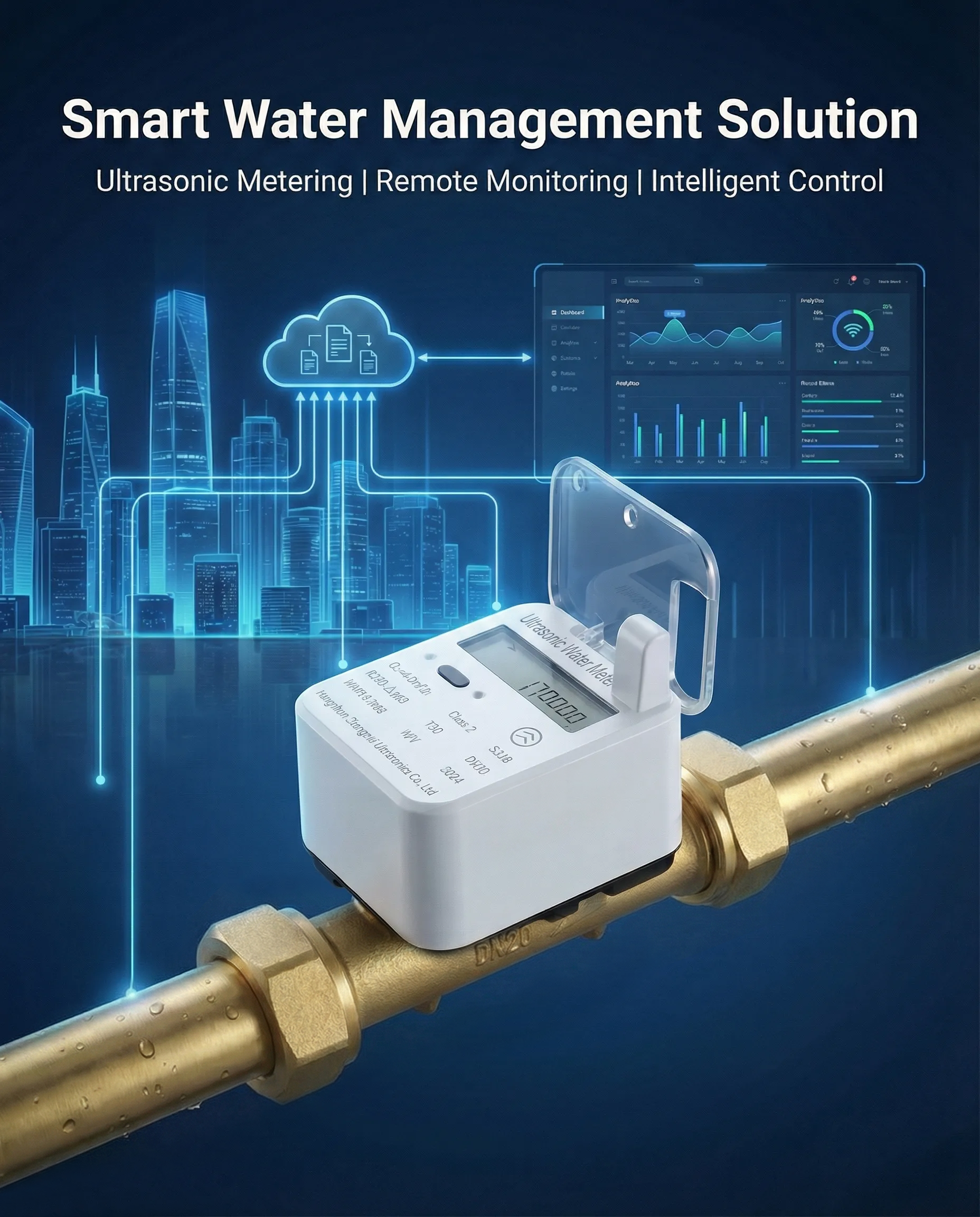
Smart Water Meters Architecture: AMR vs. AMI Evolution
Smart water meters have evolved through two dominant architectures: Automatic Meter Reading (AMR) and Advanced Metering Infrastructure (AMI). AMR introduced one-way, periodic data collection—often via drive-by or handheld receivers—to capture daily or weekly readings. While it reduced manual labor, AMR offered limited visibility and no remote control.
AMI marks a fundamental shift to two-way communication. Utilities using AMI receive granular data at 15-minute to hourly intervals, enabling real-time monitoring, remote shut-off, demand response, faster leak detection, and more precise billing. Market data illustrates the transition: in the U.S., smart meter sales revenue share rose from 22% in 2012 to 41% in 2018, while AMI now represents 58.9% of the smart water meter market (Market.us, 2023).
Cost structure also differs. AMI typically carries higher initial capital expense than AMR but can reduce long-term operational costs by 45–60% (Ponemon Institute, 2023), driven by fewer truck rolls, automated data collection, and proactive maintenance. As aging infrastructure and non-revenue water loss intensify, the move from AMR to AMI supports tighter operational control and a clearer path toward data-driven water management.
Connectivity Breakthroughs for Smart Water Meters: LPWAN and Beyond
Smart water meters rely on low-power wide-area networking (LPWAN) to deliver utility-wide insight. The shift from AMR to AMI has pushed utilities toward networks that balance cost, battery life, coverage, and data volume.
LoRaWAN, NB-IoT, and LTE-M in Real-World Utility Deployments
LoRaWAN is widely deployed in advanced metering infrastructure. It operates in unlicensed ISM spectrum and supports private or hybrid networks with kilometer-scale coverage from battery-powered endpoints. Its data rate—up to ~50 kbps—makes it ideal for periodic reads, alarms, and low-frequency telemetry. NB-IoT leverages licensed cellular infrastructure, offering up to 200 kbps and strong indoor penetration, making it well-suited for dense urban deployments requiring frequent updates. LTE-M adds lower latency and higher throughput (~1 Mbps), supporting firmware updates and bidirectional control.
| Technology | Spectrum | Peak Data Rate | Typical Use Case |
|---|---|---|---|
| LoRaWAN | Unlicensed ISM | ~50 kbps | Battery-powered metering, rural coverage |
| NB-IoT | Licensed cellular | ~200 kbps | Daily or hourly reads, dense urban |
| LTE-M | Licensed cellular | ~1 Mbps | Firmware updates, low-latency alerts |
Real-world deployments—including a large Italian water utility, a Belgian city network, and a Norwegian multi-utility—demonstrate LoRaWAN’s ability to reduce non-revenue water without carrier contracts or recurring subscription fees.
Interoperability Standards and Future-Proofing Smart Water Meter Networks
Future-proofing demands adherence to open, vendor-neutral standards. These include LoRaWAN certification, 3GPP specifications for NB-IoT and LTE-M, and application-layer protocols like DLMS/COSEM and OMS. Such standards ensure interoperability between meters, head-end systems, and analytics platforms—enabling utilities to mix vendors, avoid proprietary lock-in, and adapt as network technologies evolve.
Hybrid architectures are increasingly common: LoRaWAN handles battery-efficient telemetry across broad areas, while cellular (NB-IoT or LTE-M) provides fallback in critical zones or for time-sensitive commands. This flexibility protects long-term capital investment and supports integration of next-generation sensors—without full device replacement.
AI-Driven Intelligence in Smart Water Meters: From Detection to Decision
Real-Time Anomaly Detection Cutting Non-Revenue Water by 22%
Utilities deploying AI-based anomaly detection report a 22% reduction in non-revenue water compared with static rule-based alerts. Machine learning models learn normal flow patterns at both household and district levels, then flag deviations—such as continuous night flow, reverse flow, or abnormal spikes—within minutes. Alerts reach operators in under five minutes, enabling rapid valve isolation and customer outreach.
Adoption of AI-driven analytics has grown 35% over three years, supported by predictive diagnostics and a 20% reduction in operational errors (European Alliance for Innovation, 2023). Leak detection accuracy improves by 25%, cutting false alarms and unnecessary truck rolls. Given that non-revenue water often exceeds 30% in older networks, these gains translate directly into revenue recovery—potentially millions of liters per day for mid-sized utilities. Frequent model retraining on clean, representative meter data sustains performance and helps reduce repair backlogs while protecting public health.
Edge AI for Instantaneous Leak Localization and Response
Edge AI moves inference directly onto smart water meter gateways—eliminating cloud latency and enabling sub-second leak localization. By analyzing acoustic signatures and pressure transients locally, edge systems can pinpoint leaks to a district metered area or even an individual service line. This allows utilities to isolate affected zones before water reaches basements or roadways.
The European Commission projects that investment in AI-driven smart water technology will exceed €800 million by 2026—reflecting growing confidence in edge-enabled systems. By combining local anomaly scoring with supervisory control, operators receive prioritized work orders—not raw alarms—shortening response times, reducing damage claims, and strengthening customer trust. Local processing also lowers data transmission costs and extends battery life, making large-scale deployments economically viable. As energy-efficient AI chips become standard, edge intelligence is transitioning from innovation to expectation.
FAQ
What is the difference between AMR and AMI in smart water meters?
AMR (Automatic Meter Reading) collects periodic data one way, often requiring manual or drive-by collection methods. AMI (Advanced Metering Infrastructure), on the other hand, enables two-way communication and provides real-time monitoring, automated controls, and advanced functionalities like remote shut-offs and demand responses.
How do LPWAN networks support smart water meters?
LPWAN networks, such as LoRaWAN, NB-IoT, and LTE-M, provide efficient, low-power connectivity for smart water meters by balancing data transmission needs with battery life and ensuring coverage over long distances and dense urban areas.
Why are interoperability standards essential for smart water metering?
Interoperability standards like LoRaWAN certification and 3GPP specifications ensure compatibility between devices, enabling utilities to incorporate devices from various vendors and safeguard against technology obsolescence.
What role does AI play in smart water metering?
AI aids in real-time anomaly detection, predictive diagnostics, and smart decision-making, helping utilities locate leaks faster, reduce operational errors, and recover non-revenue water effectively.
What are the benefits of edge AI in smart water meters?
Edge AI processes data locally at the meter level, allowing for real-time leak detection, faster response times, reduced data transmission costs, and extended battery life, enhancing overall efficiency and sustainability.