
 EN
EN
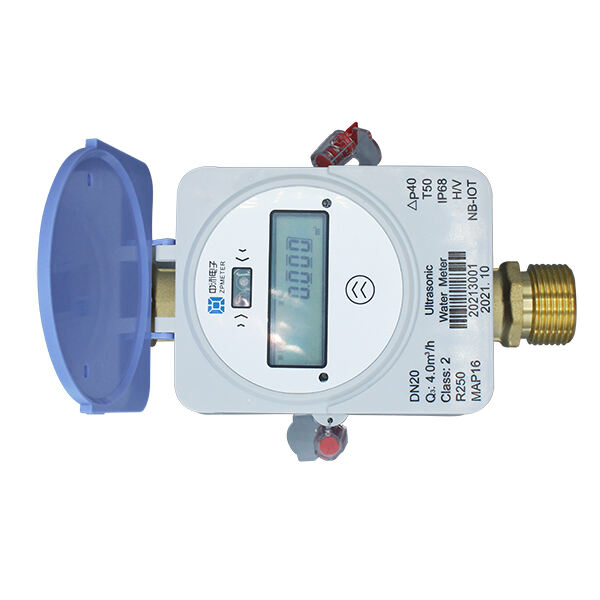
Superior Accuracy and Bidirectional Flow Measurement
Time-of-Flight Principle Enables Precision Across Flow Ranges
Ultrasonic water meters work by using sound waves to measure how much water is flowing through pipes. These meters send out high frequency sound pulses at an angle across the pipe, first going with the flow direction then against it. They figure out the speed of water based on how long it takes for these signals to travel back and forth. The whole system doesn't have any moving parts, so there's no wear and tear from friction. This makes them really accurate too, around plus or minus 1% even when measuring tiny amounts as low as 0.01 cubic meters per hour all the way up to full capacity. Mechanical meters struggle with changing conditions like different water temperatures or stuff floating in the water, but ultrasonic ones keep performing consistently well regardless of these factors. That's why many cities and industries are switching to them for things like drinking water distribution, factory processes, and agricultural irrigation systems where older meter types tend to break down over time.
±0.5% Repeatability vs. 2–5% for Mechanical Meters – Critical for Billing & Leak Detection
Ultrasonic meters can measure with around 0.5% repeatability, which is about 10 times better than the usual 2-5% range seen in mechanical meters according to standard flow tests. This kind of consistent performance makes billing much fairer since it stops those annoying cases where meters just don't register properly and lead to lost revenue. Plus, these meters help catch leaks earlier on. Water companies have actually reported finding leaks 30 percent quicker because they can detect tiny flow irregularities at night when demand drops off something serious happens here. Mechanical meters tend to struggle completely below 2 cubic meters per hour during those same hours. What's more, ultrasonic meters don't need regular recalibrations either. A utility serving half a million connections could save roughly seven hundred forty thousand dollars each year on maintenance costs alone (Ponemon Institute found this back in 2023).
True Bidirectional Measurement Supports Reverse Flow Monitoring and Network Integrity Analysis
Ultrasonic sensors can tell which way water is flowing just by looking at how signals behave differently on each side of the pipe - no need for those extra reverse flow adapters anymore. When pumps fail or valves get set wrong, the system automatically spots when water starts going backward, protecting clean drinking water supplies from getting mixed with dirty stuff. Water companies rely on constant two-way readings to track sudden changes in pressure patterns, find areas where pipes might burst under stress, schedule when pumps should run most efficiently, and check if their district meter areas are working properly during pressure testing. These readings also help catch illegal connections between different parts of the water network with pretty good accuracy.
Exceptional Reliability and Low Operational Burden
No Moving Parts: Eliminates Wear, Clogging, and Calibration Drift
Unlike traditional meters that rely on gears, turbines, and pistons, ultrasonic models eliminate common problems like mechanical wear, clogging from debris, and those annoying calibration issues that creep in over time. Many major utility companies have seen their maintenance costs drop by around 30% since switching to this newer tech. Since there's no need to constantly recalibrate or perform mechanical checks, these devices keep running smoothly without interruption. That reliability makes all the difference for cities and factories where even short periods of downtime can mean big money losses and damaged reputation among customers who expect consistent service.
Ultra-Low Start Flow (<0.01 m³/h) and Negligible Pressure Loss (<0.01 bar)
Ultrasonic meters have start flow sensitivity under 0.01 cubic meters per hour, which means they pick up on those tiny usage spikes that mechanical meters often miss completely. This makes for much better billing accuracy and gives utilities a clearer picture of actual demand patterns over time. The open pipe design creates almost no pressure drop at all, around 0.01 bar or less, so there's hardly any impact on how water flows through the system. Water companies running these systems notice something interesting too. Some research has shown that this low resistance actually cuts down on pumping costs by about 3% in many cases. That might not sound like much, but when multiplied across an entire network, it adds up to real savings while also helping manage resources more responsibly.
Installation Flexibility and Seamless Smart Water Integration
Multiple Form Factors: Clamp-On, Insertion, and Inline – Adaptable to Any Pipe Infrastructure
There are actually three different ways to install ultrasonic meters depending on what kind of infrastructure we're dealing with. The clamp-on type just sits outside the pipe, which works great when we need something temporary or when accessing the pipe itself isn't possible without shutting everything down. For those situations where some actual contact with the pipe is needed but not too much, there's the insertion model that only requires drilling a small hole through the pipe wall. These cause very little disruption during installation. Then we have inline units designed specifically for brand new construction projects. What's really nice about all these options is they work with pretty much any common pipe material out there including copper, PVC, steel, even old fashioned asbestos cement pipes ranging from just 15mm up to massive 600mm diameters. This compatibility lets utility companies maintain consistent measurement standards whether they're working with decades old infrastructure or completely new systems being built today.
Native IoT Readiness: NB-IoT/LoRaWAN Support, Remote Diagnostics, and <10 µA Sleep Mode
The latest ultrasonic water meters come equipped with NB-IoT and LoRaWAN connectivity, sending data straight to cloud platforms without needing those extra gateway devices in between. These meters can detect leaks almost instantly if there's any flow going on below 0.01 cubic meters per hour. They also allow for firmware updates wirelessly, which saves time during maintenance. What makes them really stand out though is their power management system that keeps the current draw extremely low while in sleep mode, around 10 microamps or so. Because of this efficient design, batteries last way longer than expected, often making it past the 15 year mark. And what does all this mean? Each meter becomes much more than just a measuring device. Instead, they act as smart nodes within the entire water distribution network, helping monitor districts, run automatic analysis, and manage the whole system before problems even arise.
FAQs about Ultrasonic Water Meters
What makes ultrasonic water meters more accurate than mechanical meters?
Ultrasonic water meters use sound waves to measure water flow, ensuring high accuracy of around ±1%. Unlike mechanical meters, they have no moving parts, eliminating friction and wear for consistent performance regardless of changing conditions.
How do ultrasonic water meters help in leak detection?
Ultrasonic meters can detect tiny flow irregularities, distinguishing normal flow from potential leaks. This capability allows water companies to identify leaks approximately 30% faster, even during low-demand periods. This helps in preventing water loss and ensuring timely repairs.
Can ultrasonic water meters measure bidirectional flow?
Yes, ultrasonic sensors can determine water flow direction, supporting bidirectional measurement without additional adapters. This helps in reverse flow monitoring, protecting drinking water supplies, and aiding network integrity analysis.
How do ultrasonic meters integrate with IoT systems?
Ultrasonic meters support NB-IoT and LoRaWAN connectivity, allowing them to send data directly to cloud platforms. They offer remote diagnostics, firmware updates, and exceptionally low power consumption, enhancing their integration into IoT systems.